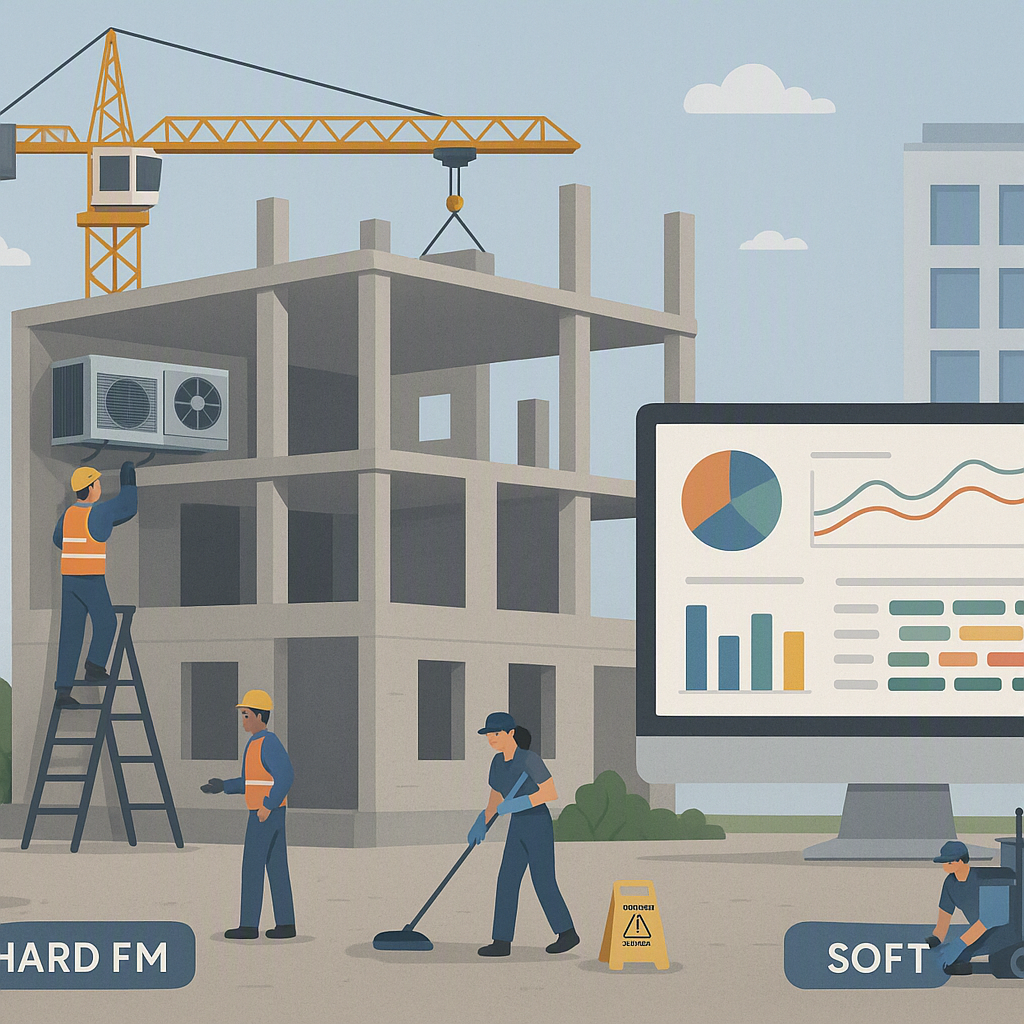
Hard FM vs Soft FM: Practical Applications for Construction Contractors
Facilities management (FM) is a complex yet critical aspect of the construction industry. It involves managing both Hard FM (physical assets such as buildings, equipment, and utilities) and Soft FM (services like cleaning, security, and catering). Both types of FM are essential for smooth operations, yet they come with unique challenges, especially when managed across multiple sites.
Disconnected systems exacerbate these challenges. Without centralized workflows, contractors often face bottlenecks such as chasing approvals, reconciling mismatched data, or overspending on subcontractor services. This article explores practical strategies to streamline Hard FM and Soft FM management, offering actionable steps for construction contractors.
Hard FM: What’s at Stake?
Hard FM focuses on tangible, physical infrastructure, including:
- HVAC systems
- Electrical wiring
- Plumbing
- Structural repairs
- Heavy machinery and equipment
In construction, Hard FM often intersects with asset lifecycle management. For example, a crane leased for one project might need to be reallocated to another site. Without proper tracking, this can lead to underutilization, costly delays, or accidental double-booking.
Actionable Steps for Managing Hard FM:
-
Implement Asset Tracking: Use asset management software to monitor the physical location, condition, and utilization of equipment. For instance, JobNext’s Equipment Allocation feature tracks asset movement and ensures cost allocation matches utilization.
-
Schedule Preventive Maintenance: Don’t wait for equipment to break down. Regular inspections and preventive maintenance can extend the lifespan of assets and prevent unexpected downtime.
-
Use Utilization Dashboards: Monitor which assets are in use, idle, or nearing the end of their lifecycle. This ensures equipment is allocated effectively and reduces unnecessary leasing or purchase costs.
-
Centralize Documentation: Store contracts, maintenance schedules, and warranty details in a single system. Centralized documentation prevents miscommunication and ensures compliance with warranty terms.
Soft FM: The Invisible Backbone
Soft FM, while less tangible, plays an equally crucial role. Examples include:
- Cleaning services for project sites
- Security for material stockyards
- Catering services for construction staff
These services are often underestimated during budgeting and planning, leading to disruptions. A structured workflow can help manage Soft FM efficiently. For example, JobNext’s Work Order system converts subcontractor proposals into executable contracts, including activity schedules, manpower requirements, and compliance checks.
Actionable Steps for Managing Soft FM:
-
Automate Scheduling: Use a scheduling system to track service frequency, manpower hours, and deadlines for Soft FM tasks.
-
Monitor Vendor Performance: Track subcontractor performance using KPIs like service timeliness, adherence to budget, and compliance.
-
Budget for Scope Creep: Frequently, Soft FM services like cleaning or catering can expand in scope. Build a buffer into your budget and use a workflow system to monitor changes.
-
Ensure Compliance: Labor compliance for Soft FM services (e.g., PF, ESI, safety certifications) is non-negotiable. Integrated systems can flag gaps and ensure adherence.
Real-Life Problem: Multi-Site FM Chaos
Let’s break down a common scenario: You’re managing a metro rail project with 15 sites. Hard FM involves maintaining generators and water pumps, while Soft FM includes cleaning station premises and monitoring security. Each site has unique requirements, and your team is overwhelmed by manual spreadsheets. Deadlines slip, and costs spiral.
How to Fix It:
-
Centralize Documentation: Use a single system to store contracts, schedules, and subcontractor details. This eliminates the need for fragmented spreadsheets.
-
Automate Approvals: Set multi-level workflows for purchase orders and service bills. JobNext features automated approval workflows that reduce bottlenecks.
-
Track Real-Time Data: Monitor asset utilization and service frequency using dashboards. Real-time insights allow you to make informed adjustments to schedules and budgets.
-
Standardize Processes Across Sites: Develop consistent templates for contracts, work orders, and compliance checks to streamline operations across multiple locations.
Common Mistakes Contractors Make
Even seasoned contractors can fall into common pitfalls. Here are three key issues and how to avoid them:
1. Ignoring Expiry Dates
Rate contracts for high-volume materials like steel or cement expire periodically. Forgetting to renew them can leave you paying higher prices mid-project—a costly oversight.
Solution: Use contract management software to track expiry dates and set automated alerts for renewal deadlines.
2. Overlooking Compliance
Soft FM services often involve labor compliance, such as PF, ESI, and safety certifications. Missing these can lead to penalties or project delays.
Solution: Use systems that flag compliance gaps during vendor selection and track certifications.
3. Failing to Map Costs
Hard FM assets like cranes must be allocated to jobs correctly. Without proper tracking, you lose visibility into which project bears the cost.
Solution: Implement asset tracking systems that assign direct allocations and calculate depreciation for equipment.
Frequently Asked Questions (FAQ)
Q1: Can Soft FM impact project timelines?
Yes, Soft FM plays a critical role in maintaining site readiness. For example, poor cleaning schedules can delay inspections, while security lapses may disrupt material deliveries. Structured workflows help prevent these issues.
Q2: How do I track both Hard and Soft FM on one platform?
Use an ERP system like JobNext to centralize workflows for equipment, services, and billing. This eliminates the need for separate systems and ensures consistency.
Q3: What’s the ROI of better FM management?
Improved FM management leads to reduced compliance penalties, fewer subcontractor overruns, better asset utilization, and lower downtime—all contributing to higher project profitability.
Q4: How can I ensure compliance across multiple sites?
Standardize compliance checklists and use centralized software to track certifications, labor laws, and site-specific requirements.
Q5: Can automation help reduce FM costs?
Absolutely. Automation minimizes manual errors, speeds up approval processes, and provides real-time data insights to optimize resource allocation.
Comparison Table: Hard FM vs Soft FM
| Aspect | Hard FM | Soft FM |
|---|---|---|
| Focus | Physical assets (equipment, utilities, etc.) | Services (cleaning, security, catering, etc.) |
| Examples | HVAC systems, plumbing, electrical wiring | Cleaning schedules, security patrols, catering services |
| Complexity | Asset tracking, maintenance schedules | Service frequency, manpower tracking |
| Common Challenges | Underutilization, costly delays | Scope creep, compliance issues |
| Solutions | Asset management systems, utilization dashboards | Automated workflows, vendor monitoring |
Call to Action
If FM chaos is slowing your projects, it’s time to take control. JobNext offers structured workflows for managing both Hard FM and Soft FM, ensuring nothing falls through the cracks. From automating approvals to tracking real-time data, JobNext equips you with the tools to streamline operations and maximize ROI. Get started free →
Learn more at JobNext.ai