Protecting Margins in Construction: Why BOQ Profitability Matters
Margins in construction are tight — often razor-thin. The average profit margin for small construction companies in India hovers around 5-8%, according to industry surveys. That leaves little room for error. A single cost overrun can wipe out months of hard work.
Where do margins erode most often? It’s usually hidden in the details: estimation errors, scope changes, procurement overruns, and subcontractor mismanagement. If you’re not catching these problems early, they snowball into massive losses.
The BOQ Margin Report: A Critical Tool for Contractors
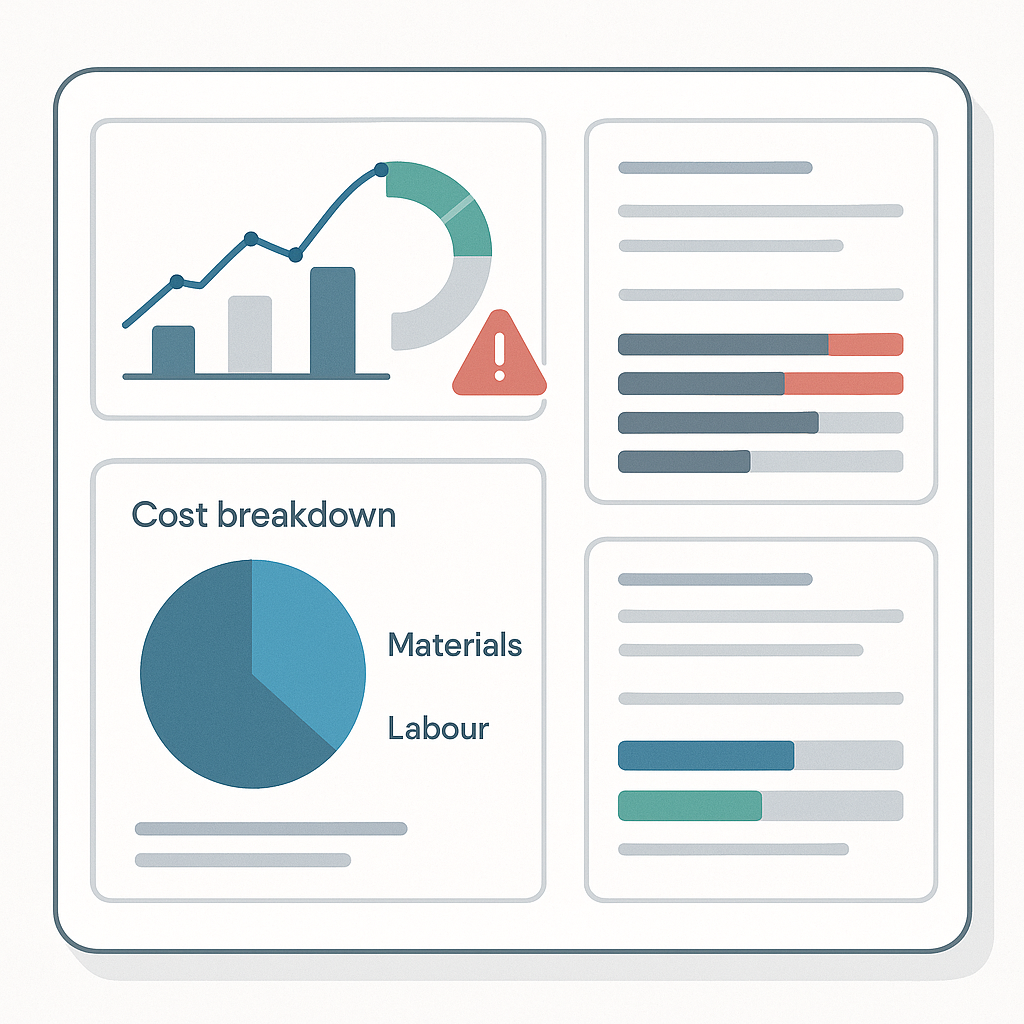
One of the best ways to stay ahead of margin erosion is by using a BOQ (Bill of Quantities) Margin report. This report breaks down profitability by comparing contracted values against actual costs for labour, materials, plant, subcontractors, and overheads — at the level of individual BOQ items.
Illustrative example — Let’s say you quoted ₹10,000 for a specific BOQ item, based on estimated costs of ₹8,000 for materials and ₹2,000 for labour. If your actual costs come in at ₹11,500, that’s a negative margin. And if you don’t catch it early, similar overruns across multiple items could sink the project.
JobNext’s BOQ Margin report is designed specifically for this purpose. It flags any negative-margin items so contractors can investigate immediately. Their documentation recommends reviewing this report weekly to ensure nothing slips through the cracks. Read more about BOQ profitability tracking →
Real-Life Application: Catching Estimation Errors Early
A common mistake is underestimating material costs. For example, steel prices might spike unexpectedly between the time you quote and the time you purchase. If you’re not tracking real-time margins, you won’t notice the discrepancy until months later — when it’s too late to adjust.
By using a BOQ Margin report, contractors can flag negative margins early. This allows them to investigate the root cause, whether it’s due to procurement delays, estimation errors, or unexpected price fluctuations, and take corrective action before the problem escalates.
Structured Procurement: Another Key to Margin Control
Procurement chaos is another silent killer of margins. Imagine this: your site managers submit material requisitions by email. Vendors reply with half-filled RFQs. Approvals take days because the chain of communication is broken. By the time you issue a purchase order, prices have already risen.
A structured procurement workflow — like the one in JobNext — eliminates this chaos. It standardizes the process from Material Requisition (MR) to Request for Quotation (RFQ), Vendor Offers, and finally Purchase Order (PO). Approval chains ensure every step is transparent, and every cost is tracked. Learn more about structured procurement workflows →
Common Mistakes to Avoid
- Skipping Weekly Reviews: Profitability tracking isn’t a one-time activity. BOQ Margin reports need to be reviewed weekly to catch issues before they compound.
- Ignoring Small Variances: A small overrun might seem minor, but if it happens across multiple BOQ items, it can add up to significant losses.
- Overcomplicating Estimates: Too much detail in your estimates can create false precision. Use structured quoting methods to ensure consistency.
- Delaying Subcontractor Reconciliation: Always reconcile subcontractor materials before approving bills. Missing this step leads to inflated costs.
FAQ
What is a BOQ Margin Report?
It’s a profitability analysis tool that compares contracted values against actual costs for labour, materials, plant, subcontractors, and overheads per BOQ item. Negative margins indicate cost overruns.
How often should contractors review BOQ Margin reports?
Weekly. Early reviews catch issues before they compound into significant losses.
Can BOQ Margin tracking prevent scope creep?
Yes. By identifying negative margins, you can investigate whether the problem is due to scope changes and address them before they spiral.
How does structured procurement help margins?
It reduces delays, ensures approvals are transparent, and locks in better vendor terms — all of which keep costs predictable.
Do small contractors need this level of tracking?
Absolutely. Small contractors are the most vulnerable to margin erosion because they have less capital to absorb losses.
Conclusion: Take Control of Your Margins
Margins aren’t just numbers — they’re the difference between surviving and thriving in construction. Tools like BOQ Margin reports and structured procurement workflows are essential for spotting problems early and protecting your bottom line.
If margin erosion is hitting your projects, JobNext can help. Get started free →
Learn more at JobNext.ai