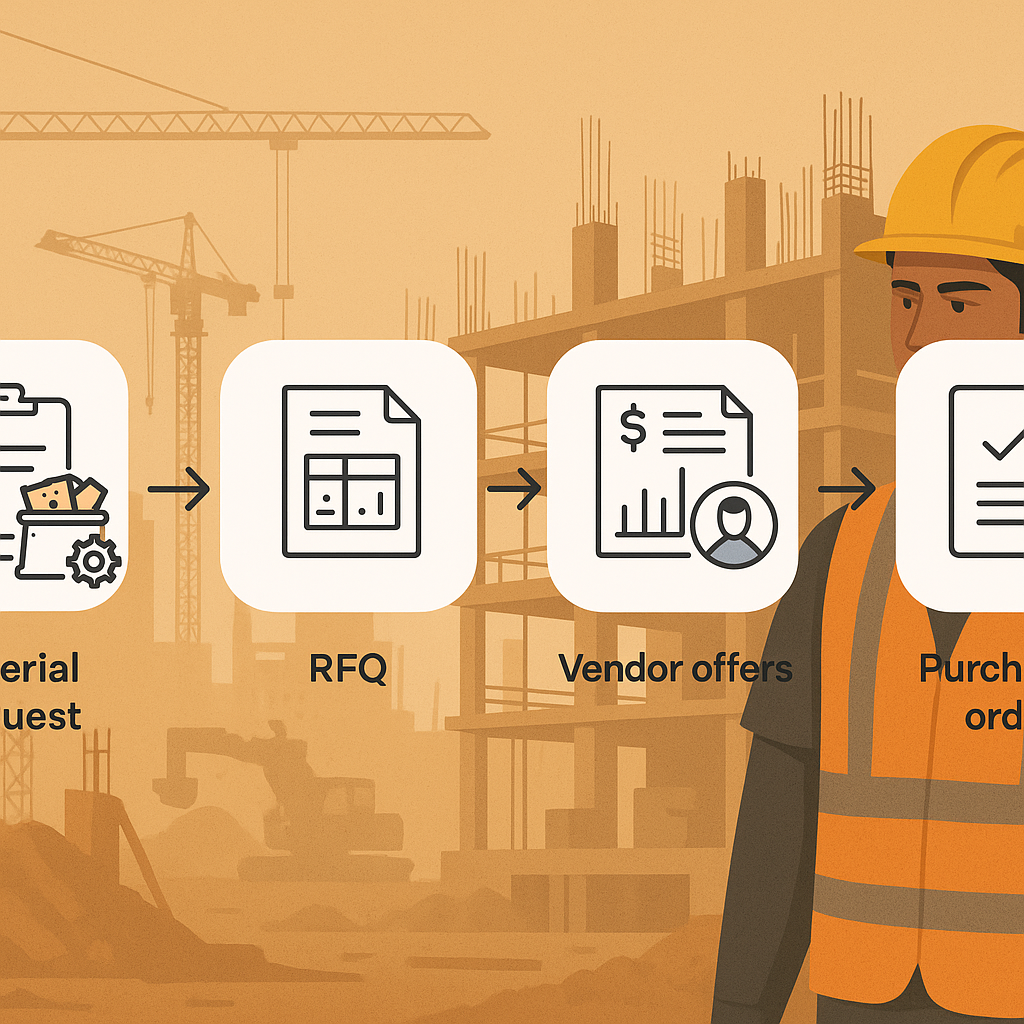
The Silent Killer in Construction Margins: Poor Procurement
Procurement is where most construction projects lose money. Sounds dramatic? It’s not. A 2023 McKinsey report on construction efficiency highlighted that procurement errors—like missed RFQs, manual data re-entry, and unverified vendor payments—account for up to 20% of margin erosion globally. In India, where material costs can swing wildly, the problem gets worse.
Common Procurement Chaos: Real-World Examples
The reality of poor procurement is felt daily across construction sites. Here’s a detailed example:
A mid-size contractor managing four concurrent projects needs 500 tons of steel across three sites. The site managers email their material requests (MRs) to the procurement team, who manually consolidate them into one RFQ. Vendors respond via email—some with missing prices, others with outdated catalogs. The procurement team scrambles to finalize offers, but approvals get delayed because the budget head is traveling. Meanwhile, site work slows down, and urgent purchases drive up costs.
This chaos isn’t limited to steel. Cement, aggregate, plumbing materials, electrical fittings—all follow a similar pattern. A study by Deloitte (2021) found that manual procurement systems increase operational inefficiencies by 30% due to fragmented communication, lack of visibility, and delayed approvals.
Case Studies: The Cost of Chaos
-
Case Study 1: The ₹10 Lakh Mistake A Pune-based residential contractor underestimated steel costs for a housing project due to outdated vendor quotes. The procurement team placed the PO based on the older rates but was later billed at market prices, resulting in a ₹10 lakh overcharge. Without an ERP or centralized system, they couldn’t cross-check historical vendor pricing.
-
Case Study 2: Vendor Disputes A Delhi-based contractor faced frequent disputes with vendors over delivery timelines and payment terms. Without a system to track vendor performance, late deliveries delayed site work by weeks. The contractor incurred ₹4 lakh in penalties for delayed project milestones.
The Fix: Structured Procurement Workflows
Here’s where ERP systems like JobNext step in. JobNext’s procurement module enforces a clear MR → RFQ → Vendor Offer → PO workflow, with multi-level approval chains built in. Every material request is validated against project budgets, and vendor offers are compared side-by-side for real-time decision-making.
Actionable Steps to Fix Procurement Chaos
-
Centralize Material Requests Use a single platform to consolidate all site requirements. With tools like JobNext, site managers can submit MRs directly into the system, reducing manual errors.
-
Automate Vendor Comparisons Instead of juggling spreadsheets, ERP systems allow procurement teams to compare vendor offers side-by-side, flagging inconsistencies in pricing and delivery schedules.
-
Enforce Approval Chains Configure multi-level approvals to ensure purchases align with project budgets. Budget violations get flagged instantly.
-
Track Vendor Performance Historical vendor data—delivery timelines, pricing accuracy, compliance—should be maintained in the ERP for better decision-making during future purchases.
Real Impact: ₹25 Lakh Saved
A case study from ₹25 Lakh Lost to Procurement Chaos? Why Contractors Need Data Integration shows how an Indian contractor saved ₹25 lakh annually by switching to structured procurement workflows. Key results included:
- 65% Reduction in Ad-Hoc Purchases: Consolidated RFQs across projects minimized last-minute urgent buys.
- 50% Cut in Vendor Disputes: Historical vendor tracking identified reliable suppliers.
- Streamlined Budget Approvals: Real-time alerts ensured all purchases stayed within project budgets.
Why Manual Systems Fail
Manual procurement systems rely on human effort to track dozens of moving parts—MRs, vendor quotes, budgets, and approvals. Mistakes are inevitable. Here’s what usually goes wrong:
- Missed RFQs: Site managers forget to send requests for non-critical items, leading to last-minute urgent purchases.
- Unverified Vendor Payments: Without a three-way match between PO, GRN, and invoice, vendors often overcharge.
- Budget Violations: Purchases happen before approvals, blowing up project budgets.
Actionable Steps to Avoid Manual Errors
-
Implement Data Validation Ensure every MR goes through verification for accuracy and alignment with project needs.
-
Use Real-Time Alerts ERP platforms like JobNext can flag overdue RFQs, budget violations, or missing approvals, allowing procurement heads to act swiftly.
-
Integrate Financial Systems Link procurement systems with accounting software like Tally to automate GST calculations and payment reconciliations.
The Role of Real-Time Alerts
One underrated feature of procurement ERPs is real-time alerts. JobNext, for example, flags budget violations and overdue approvals immediately. Procurement heads can act fast, avoiding delays and cost overruns. Notifications also help avoid missed RFQs, ensuring every site gets what it needs on time.
Why Indian Contractors Need ERP-Driven Procurement
Indian contractors face unique challenges not seen in mature markets. Material price volatility, GST compliance, and multi-site operations add layers of complexity. ERP systems tailored for construction—like JobNext—factor these challenges into their workflows. For instance:
- Material Price Volatility: JobNext allows procurement teams to compare current market prices and vendor quotes side-by-side.
- GST Compliance: Automating GST calculations reduces errors in statutory reporting.
- Multi-Site Operations: JobNext centralizes procurement across multiple sites, ensuring consistent workflows and approvals.
Comparison Table: Manual Procurement vs ERP-Driven Procurement
| Feature | Manual Procurement | ERP-Driven Procurement (e.g., JobNext) |
|---|---|---|
| RFQ Management | Prone to errors; missed requests | Automated workflows; alerts for delays |
| Vendor Comparison | Manual spreadsheets | Side-by-side comparison in real time |
| Budget Approvals | Delayed approvals | Instant budget validation |
| Vendor Performance Tracking | No historical records | Detailed performance analytics |
| GST Compliance | Manual calculations | Automated calculations |
| Multi-Site Coordination | Fragmented communication | Centralized system across all sites |
FAQ
1. How does ERP streamline procurement approvals?
ERP platforms enforce multi-level approval workflows, ensuring every purchase is validated against budgets before execution. Approval requests are sent instantly to budget heads, who can approve or reject them even while traveling.
2. Can ERP track vendor performance?
Yes, tools like JobNext maintain historical vendor records, tracking delivery timelines, cost accuracy, and compliance. This data helps contractors identify reliable partners and avoid disputes.
3. What happens if urgent purchases bypass the ERP?
ERP systems flag out-of-workflow purchases, allowing procurement heads to investigate and correct them. This ensures accountability even for urgent purchases.
4. Is ERP worth it for contractors with <100 employees?
Yes. Even small contractors lose significant margins to procurement chaos. Automation ensures that every rupee spent is tracked and optimized, delivering a strong ROI.
5. How long does ERP implementation take?
Implementation timelines vary based on the complexity of operations. For contractors with fewer than five sites, systems like JobNext can be fully operational within 4-6 weeks.
Call to Action
If procurement chaos is bleeding your margins, JobNext can help. Its structured workflows, historical vendor tracking, and real-time alerts ensure every rupee spent is accounted for. Start saving time and money today—Get started free →
Learn more at JobNext.ai