Why Procurement Chaos is Draining Your Margins
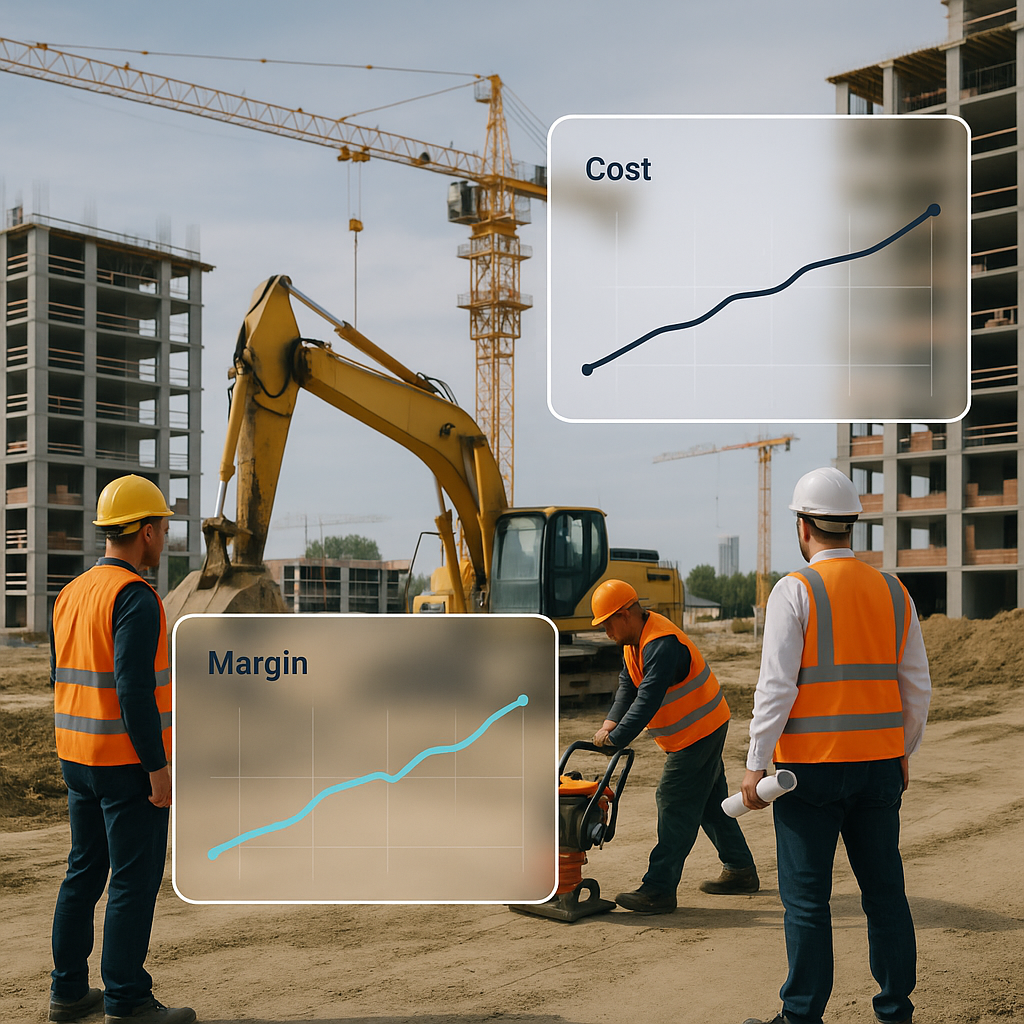
If you're running a construction company, you already know procurement isn't just about buying materials. It’s a chain reaction. A delayed material request at a site can halt an entire project. A missed RFQ (Request for Quotation) can mean overpaying for resources. Worst of all, manual workflows often lead to unapproved purchases, which directly erode your profit margins.
How Much Does This Cost?
Anecdotally, contractors lose anywhere between ₹15-25 lakh annually to procurement inefficiencies. And no, this isn't just about large companies — even mid-sized firms with 50-200 employees face this problem. According to a 2023 report by McKinsey, effective procurement could boost margins by up to 12%. But achieving these savings requires more than just spreadsheets and WhatsApp messages.
Let’s break this down with concrete examples:
- Case Example 1: A mid-sized contractor in Bengaluru missed an RFQ deadline for steel procurement. The site engineer resorted to urgent buying, leading to a 15% markup in costs compared to pre-negotiated rates. This single mistake cost ₹2 lakh.
- Case Example 2: A construction firm in Pune received low-grade cement due to miscommunication with vendors. The replacement delayed the project by 3 days, adding ₹5 lakh in labor costs.
The numbers add up quickly when procurement chaos becomes the norm.
What Happens When Procurement Goes Digital
The first step to fixing procurement chaos is to ditch manual systems entirely. This is where construction-specific ERP software comes in. Unlike generic ERPs, solutions like JobNext are designed for how contractors actually work.
Structured Workflows: A Real-Life Scenario
Imagine you need 500 bags of cement delivered to a remote project site. Without a proper system, you’d rely on:
- Phone calls to vendors
- Emails to confirm pricing
- Verbal approvals from site managers
Now, let’s look at what happens when you use a construction ERP like JobNext:
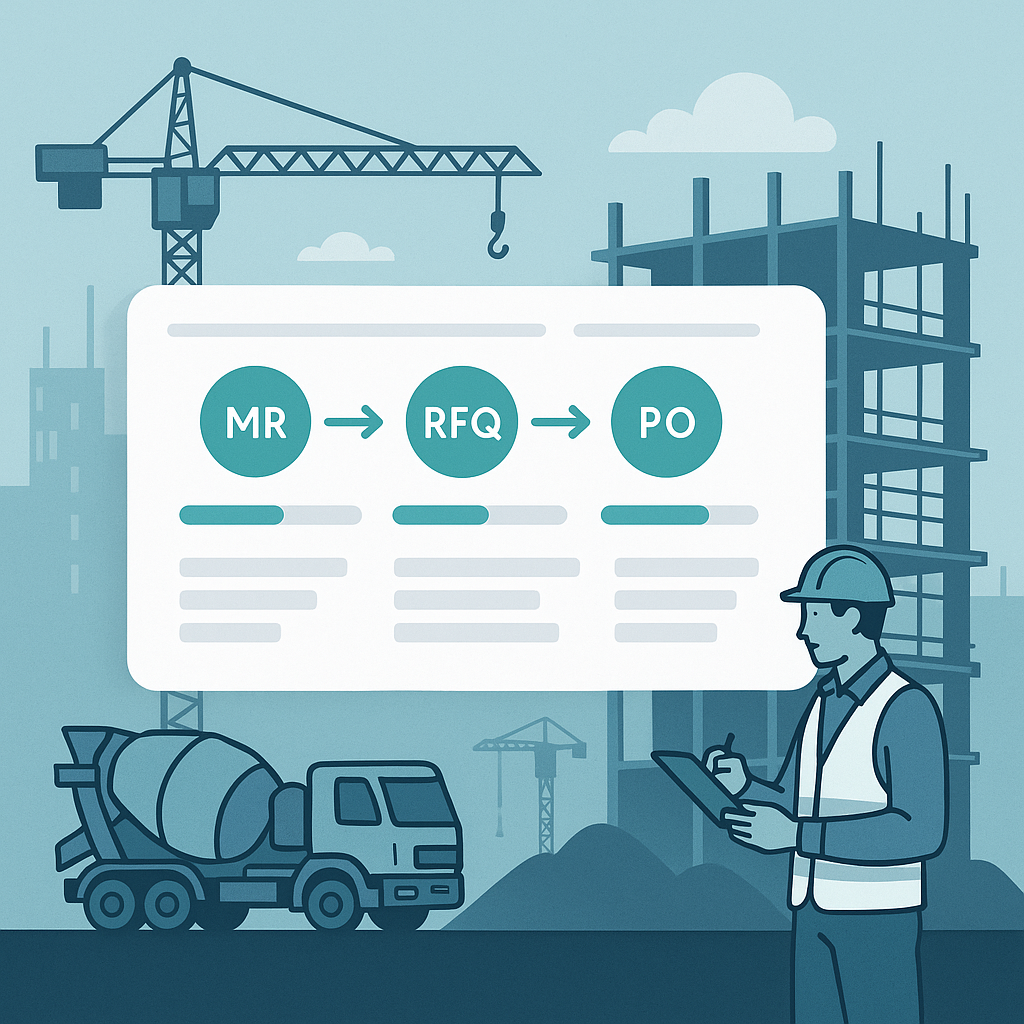
- Material Requisition (MR): A site engineer logs a request for 500 bags of cement through the ERP.
- RFQ Circulation: The procurement team automatically sends RFQs to pre-approved vendors.
- Vendor Offers: Vendors submit their quotes directly into the system.
- Approval Workflow: The system flags any quotes that exceed your budget, ensuring nothing gets approved without scrutiny.
- Purchase Order (PO): Once a vendor is selected, the system generates a PO and tracks its delivery status.
Every step is documented. Every action is tied to a budget. You’ll know exactly where margins are slipping — and can act before it’s too late.
The Numbers Speak
Let’s revisit our earlier example of the Bengaluru contractor. After adopting JobNext, their procurement team automated RFQs and approvals. Over a year, they saved ₹18 lakh by avoiding urgent purchases and negotiating better vendor rates.
Another example: A contractor in Hyderabad reduced material delivery delays by 40% after implementing ERP workflows, saving ₹12 lakh in labor downtime.
Real Impact: ₹25 Lakh Saved
In my experience, the biggest advantage of structured procurement isn’t just cost savings — it’s control. A case study on the JobNext blog highlights how one mid-sized contractor in India saved ₹25 lakh in a single year just by automating their procurement workflows.
Key Takeaways from the Case Study:
- Before ERP: The contractor frequently overpaid for materials, missed RFQs, and suffered delivery delays.
- After ERP: Every purchase aligned with project budgets, and vendor disputes dropped by 40%.
The Hidden Benefits of ERP Integration
Beyond cost savings, ERP integration solves problems you didn’t even know you had:
Vendor Management
- Centralized directory of vendors
- Performance tracking (e.g., delivery timelines, quality issues)
- Pricing trends to forecast future costs
Audit Trails
- Every transaction is logged for compliance.
- GST and TDS reporting becomes effortless.
- Reduces risks during external audits.
Real-Time Reporting
- Dashboards track procurement costs at the BOQ level.
- Instant visibility into how purchases impact overall profitability.
Actionable Steps for Implementation:
- Build a Vendor Database: Start by migrating vendor details (contact info, payment terms, etc.) into the ERP.
- Set Approval Workflows: Define budget thresholds for automatic flagging of high-cost purchases.
- Optimize Reporting: Customize dashboards to highlight cost overruns and delivery delays.
Choosing the Right ERP: 3 Questions to Ask
Not all ERPs are created equal. Here’s what to look for:
1. Is it Built for Construction?
Generic ERPs won’t understand the nuances of BOQs, subcontractor management, or RA billing. Choose a platform like JobNext that’s purpose-built for contractors.
2. Does it Enforce Budget Discipline?
Look for systems that validate every purchase against approved budgets. This is how you prevent cost overruns.
3. How Easy is Multi-Site Management?
If you’re managing multiple projects, your ERP should allow site-specific workflows while consolidating data for HQ.
Common Objections (and Why They're Wrong)
“We can't afford an ERP right now.”
You can’t afford not to. The ₹50,000 you’ll spend annually on a good ERP is nothing compared to the lakhs you’re losing to inefficiencies.
“My team won’t adapt to new software.”
Fair point. But the right ERP should prioritize ease of use. For example, JobNext’s interface includes shortcuts and dashboards that even non-tech-savvy staff can understand. Training is simple if the software mirrors your existing workflows.
“We already have an ERP.”
If your current system isn’t saving you money or solving core problems, it’s not the right fit. A construction ERP should replace — not add to — your workload.
Comparison Table: Generic ERP vs Construction ERP
| Feature | Generic ERP | Construction ERP (e.g., JobNext) |
|---|---|---|
| BOQ Management | Limited or None | Fully Integrated |
| RFQ Automation | Manual | Automated |
| Vendor Performance Tracking | Basic | Advanced |
| Multi-Site Support | Limited | Comprehensive |
| GST/TDS Compliance | Requires Customization | Built-In |
FAQ
1. How long does it take to implement a construction ERP?
Implementation timelines vary, but most contractors using JobNext report being fully operational within 3 months. The key is having a clear plan and involving your team early.
2. What’s the ROI of a specialized ERP?
For most contractors, the ROI comes from cost savings in procurement, improved billing accuracy, and better project management. Savings can range from ₹10 lakh to ₹50 lakh annually, depending on company size.
3. What about after-sales support?
Look for an ERP vendor with dedicated support teams and local expertise. For example, JobNext has strong adoption in India and GCC regions, which means their support is tailored to these markets.
4. Can an ERP handle compliance for multiple countries?
Yes, as long as it’s designed for it. JobNext, for instance, supports GST/TDS compliance for India and VAT for GCC countries without additional customization.
5. What’s the biggest mistake contractors make during ERP adoption?
Underestimating training. Even the best ERP won’t deliver results if your team doesn’t know how to use it. Prioritize hands-on training and onboarding sessions.
Final Thoughts
Procurement is where contractors win or lose. The right ERP isn’t just a tool; it’s a strategy. It’s what helps you stop bleeding cash and start staying ahead of rising costs.
JobNext offers a unified platform that simplifies procurement, among other challenges contractors face. If you’re tired of chasing approvals and dealing with vendor chaos, it’s time to upgrade.
Learn more at JobNext.ai