7 Questions to Ask Before Choosing the Best Construction ERP for Your Business
Margins in construction are razor-thin. A 5% overrun can mean the difference between profit and loss. Yet, too many contractors still rely on scattered spreadsheets, outdated systems, and manual processes to manage operations. Spoiler alert: That doesn’t work anymore. If you’re running multiple projects, you need an ERP system that keeps up. But how do you choose the best one?
Let’s ditch the generic advice and get practical. Here are seven questions you should ask before signing up for any construction ERP.
1. Does It Provide Real-Time Cost Tracking?
Here’s the hard truth: Most contractors lose up to 20% of their margins because they can’t track costs properly. Costs pile up across materials, labor, equipment, and subcontractors, but without a real-time view, you’re flying blind. You might not even realize you're losing money until the project is over.
A good ERP will give you real-time visibility into your project profitability—not just at the overall project level, but down to the BOQ, scope, and estimate. For example, JobNext offers dashboards that show exactly where your money is going, helping you spot and fix problems before they snowball.
Can the software you’re considering do that? If not, it’s a red flag.
2. Is It Built for Construction-Specific Needs?
Not all ERPs are created equal. A generic ERP might work for a retail company or a manufacturing plant, but construction is a whole different beast. You’re dealing with multiple sites, subcontractors, and complex billing methods. Look for features like:
| Construction-Specific Needs | Does Your ERP Handle It? |
|---|---|
| BOQ/WBS/Scope hierarchy | ✅/❌ |
| Measurement-based progress tracking | ✅/❌ |
| RA Bills, stage-wise, and supply BOQ billing | ✅/❌ |
| Multi-site attendance and payroll | ✅/❌ |
If your ERP doesn’t address these, it’s not “best” for your business—no matter how fancy it looks.
3. Can It Handle Multi-Site Operations?
Imagine this: You’ve got 12 active sites, each with different labor teams, subcontractors, and material requirements. Tracking attendance, payroll, and leave manually? Forget it. You’ll lose control faster than you think.
A construction ERP like JobNext simplifies this chaos. It centralizes attendance, payroll, and HR management across all sites. Need to allocate staff from one camp to another? It’s all in one system, updated in real time. No more juggling Excel sheets or outdated attendance logs.
4. How Does It Manage Procurement?
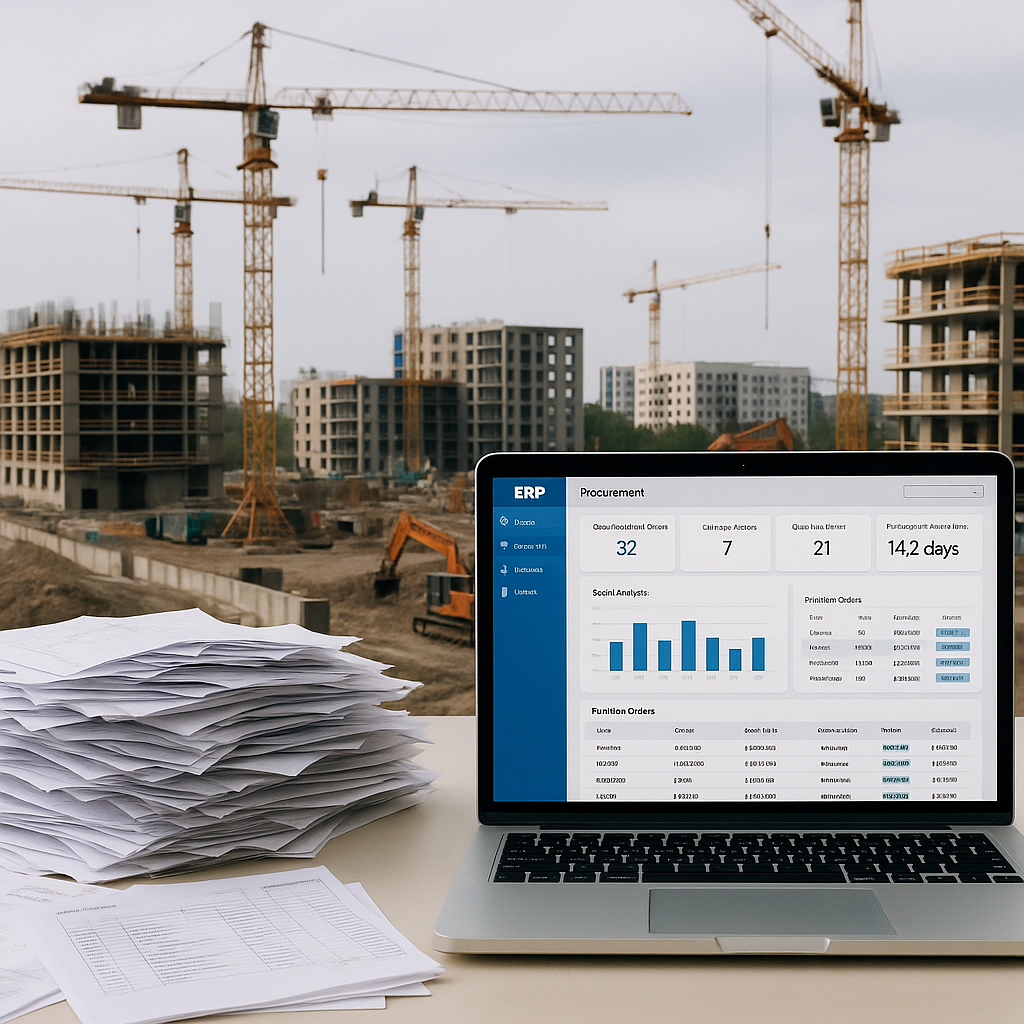
Procurement is where things often fall apart. Missing approvals, misplaced RFQs, and manual chaos can delay projects and blow up costs. Ask how the ERP handles:
- Material Requests (MR)
- Request for Quotations (RFQ)
- Vendor Offers
- Purchase Orders (PO)
Does it have structured workflows with approval chains? Can it track vendor performance? If not, you’ll be stuck chasing paper trails.
5. Does It Plug Revenue Leaks in Billing?
Billing errors are silent profit killers. If you’re not billing correctly—whether it’s RA Bills, stage-wise, or supply BOQ—you’re leaving money on the table. A good ERP should support multiple billing methods and ensure nothing falls through the cracks.
The JobNext blog highlights how contractors often lose revenue because of disconnected billing systems. A unified platform eliminates this risk, ensuring accurate invoicing every time.
6. Is It Cloud-Based and Scalable?
Scalability isn’t optional. If you’re planning to grow—more projects, more sites, more teams—you need a cloud-based ERP. Why? Because on-premise systems are a nightmare to scale and maintain.
Cloud ERPs also give you access anytime, anywhere. Whether you’re in your office or on-site, you’ve got real-time data at your fingertips. Plus, cloud systems are future-proof. You won’t need to rip and replace them as your business grows.
7. What’s the Total Cost of Ownership?
Price matters. But don’t just look at the upfront cost. Consider the total cost of ownership (TCO):
- Implementation costs
- Training for your team
- Annual subscription fees
- Downtime during migration
A cheaper system that doesn’t perform will cost you more in the long run. Focus on value, not just price.
Final Thoughts
Choosing the best construction ERP isn’t about ticking boxes on a feature list. It’s about solving real problems—cost tracking, billing errors, procurement chaos, and multi-site complexity.
If you’re still on the fence, check out this deep dive on Why Contractors Can't Grow Without Cloud ERP. It’s packed with insights on how cloud systems help contractors stop margin erosion—and grow profitably.
Got questions? Let’s talk. We’ve helped hundreds of contractors navigate this decision, and we’re happy to share what we’ve learned.
Ready to see JobNext in action?
Multi-tenant SaaS ERP for construction, facilities management, and contracting — covering preconstruction, project execution, procurement, HR & payroll, equipment, finance, and 150+ analytics reports.
Get Started Free →Learn more at JobNext.ai