Why Multi-Site Payroll is a Nightmare for Contractors
Picture this: You’re running payroll for 500 employees spread across 12 sites. Some are in remote project camps with patchy internet, while others are in bustling city offices. Add different attendance systems, local labor laws, and fluctuating overtime rules. What do you get? Chaos. And mistakes that cost money — both in fines and frustrated employees.
We’ve seen contractors try to handle this with spreadsheets or disconnected tools. It doesn’t work. Too many moving parts: shift timings, attendance logs, statutory compliance (PF, ESI in India; WPS in GCC), and site-level allocations. Miss one detail, and your payroll team is firefighting for weeks.
The Hidden Costs of Payroll Errors
Payroll isn’t just an admin task. It’s tied directly to your margins. A delayed salary can lead to worker dissatisfaction and absenteeism — which hits project timelines. Overpayments or compliance misses? Those drain cash and expose you to penalties.
According to a PwC study, 40% of companies report payroll compliance errors annually. For contractors, the risk multiplies because your workforce is mobile and spread out.
Why HR Software is Non-Negotiable for Contractors
The obvious fix? HR software built for multi-site operations. But not all solutions are equal. Most generic HR tools don’t handle the unique needs of contractors — like labor allocation across projects or camp-based attendance tracking.
This is where tools like JobNext come in. It’s not just about payroll calculation. It’s about integrating attendance, leave, and project-level allocations into one system. For instance, JobNext’s HR module centralizes attendance data from biometric devices across sites, applies local compliance rules automatically, and calculates payroll at the click of a button. No manual intervention, no guesswork.
Real-World Example: Payroll Transformation
Let’s take a real example. A 6,000-employee facilities management company in Oman was struggling with payroll for 1,200 sites. Their old system required 21 days to process salaries — and even then, errors were common. After switching to an integrated ERP with HR capabilities, they reduced payroll processing to just 5 days. This wasn’t magic — it was the result of connecting attendance devices directly to the ERP and automating calculations. You can read the full story on how Al Nab’a Services transformed their operations in 12 months.
What Features Should You Look For?
Here’s a quick checklist for evaluating HR software:
| Feature | Why It Matters |
|---|---|
| Multi-Site Attendance Tracking | Consolidates data from multiple locations. |
| Compliance Automation | Avoids fines for missing local regulations. |
| Project-Based Costing | Allocates labor costs accurately. |
| Mobile Accessibility | Empowers field staff to log attendance. |
| Integration with Finance Systems | Ensures smooth salary disbursements. |
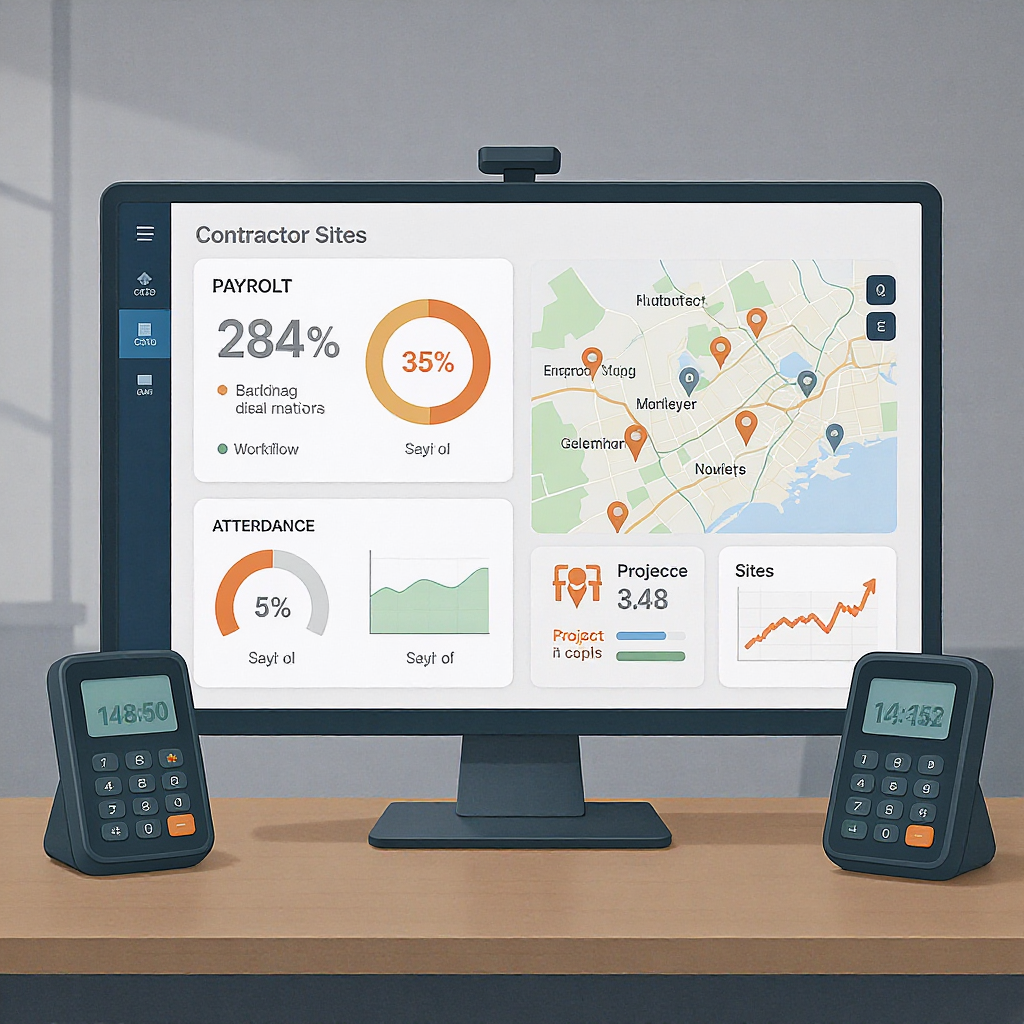
The best systems also include dashboards, so you can spot anomalies like overtime spikes or high absentee rates before they spiral out of control.
Why Payroll is Part of the Bigger Picture
If you’re thinking, "This is just payroll," think again. Payroll is deeply tied to project profitability. Labor is often your biggest cost, and without accurate tracking, you’re flying blind. Systems like JobNext tie payroll to project budgets, so you see labor costs in real-time. No more end-of-project surprises.
As we outlined in The Hidden Cost of Tool Fragmentation, using disconnected tools creates blind spots. Unified platforms like JobNext eliminate this by integrating HR, payroll, and project tracking.
Final Thoughts
Payroll errors aren’t just annoying — they’re expensive. For multi-site contractors, the complexity is unavoidable, but the chaos doesn’t have to be. By investing in software designed for your industry, you can save time, reduce errors, and actually improve employee satisfaction.
Want to learn more? Check out JobNext’s HR and payroll features to see how they’re helping contractors across India and GCC simplify complex payroll operations.
Ready to see JobNext in action?
Multi-tenant SaaS ERP for construction, facilities management, and contracting — covering preconstruction, project execution, procurement, HR & payroll, equipment, finance, and 150+ analytics reports.
Get Started Free →Learn more at JobNext.ai