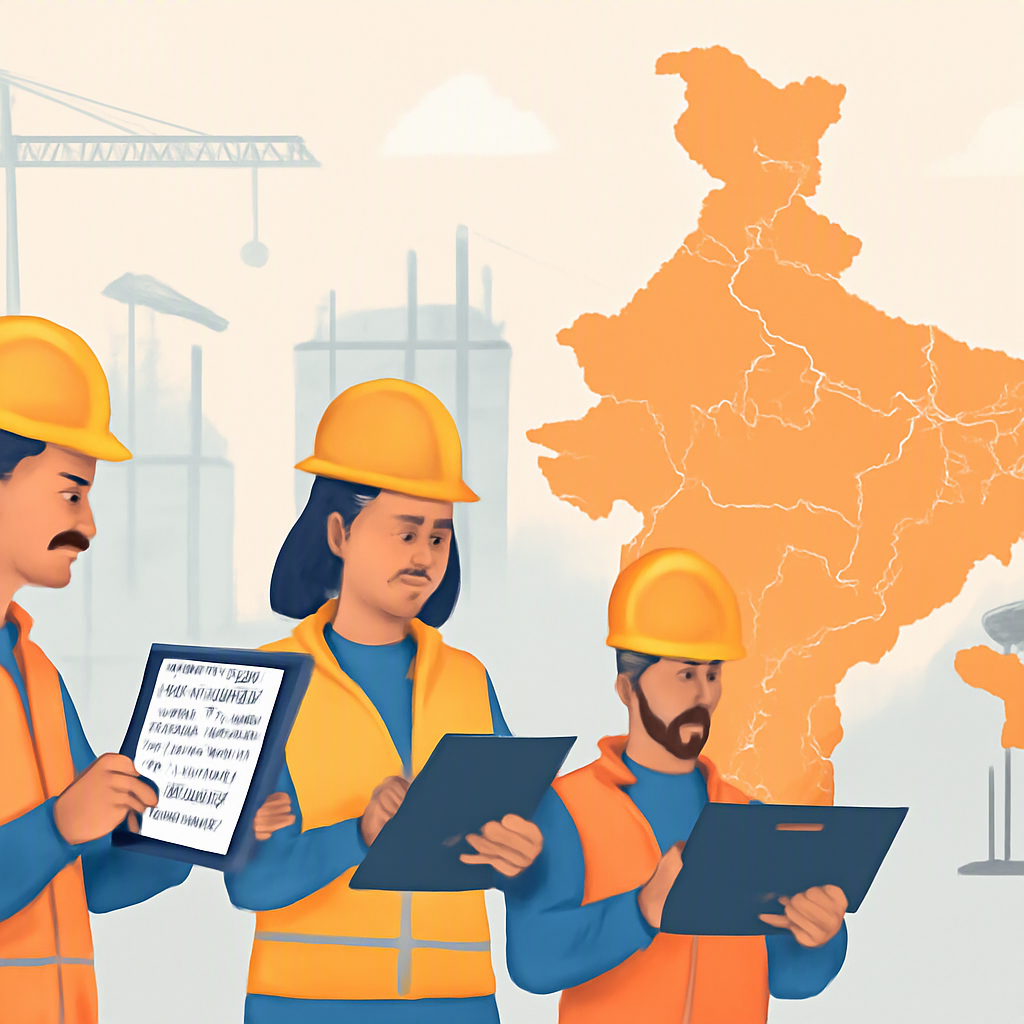
The Hidden Drain: Why Construction Admin Costs Are So High
Administrative overhead in construction doesn't get enough attention. Everyone talks about material costs, labor shortages, or project delays — but admin costs quietly chip away at profits. According to McKinsey, inefficient processes and disconnected tools can eat up 20-30% of project margins. Think about it: chasing vendor quotes, fixing billing errors, and reconciling payroll for hundreds of site workers across projects — it's a logistical nightmare.
Fragmentation Is the Culprit
The root issue is tool fragmentation. Most contractors rely on separate software for tendering, procurement, HR, and finance. But these systems rarely talk to each other. Take billing, for example: when procurement data isn't automatically synced to your invoicing tool, you risk revenue leakage. Missed RA bill line items, unbilled scope changes — it all adds up.
The Hidden Cost of Tool Fragmentation explains this problem perfectly. Contractors juggling multiple disconnected apps often spend hours manually reconciling data, and mistakes are inevitable. Worse, those mistakes can cost you client trust or compliance penalties.
How Integrated ERP Systems Solve This
A unified ERP platform eliminates fragmentation. Instead of siloed tools, you get one system where procurement, billing, HR, and finance all connect seamlessly. Here’s what that looks like in practice:
Example: Structured Procurement Workflows
Manual procurement workflows are a time sink. Without clear processes, purchase requests (MRs) pile up, vendor quotes get lost, and approvals turn into endless email chains. JobNext’s MR → RFQ → Vendor Offers → PO workflow fixes this. Every request moves through a structured pipeline with built-in approval hierarchies. No more chasing signatures or revising POs.
This isn't just about speed. It's about accuracy. When procurement data flows directly into finance, your billing becomes airtight. For example, a 12-month project with 100+ POs can see revenue leakage drop by 15-20% simply by automating this integration. That’s real savings.
The Numbers Don’t Lie
Let’s break it down. Contractors spend, on average, 18-22 hours per week on admin tasks like payroll, billing, and procurement approvals. Multiply that across a team of 5-10 back-office staff, and you’re looking at ₹6-8 lakh/month in administrative costs for a mid-size company. Unified ERP systems can cut that by 30% — that’s ₹2-2.4 lakh saved monthly, or ₹24-28 lakh annually.
Case Study: Al Nab’a Services
Al Nab’a Services in Oman faced exactly this problem. Before implementing JobNext, their payroll cycles took 21 days and contract management required a dedicated 5-person team. After switching to a unified platform, payroll processing dropped to 5 days and contract management became fully automated. Their story is detailed in How a 6,000-Employee Facilities Management Company Transformed Operations in 12 Months.
Thinking Long-Term
You might be wondering: “Won’t ERP implementation cost more upfront than it saves?” Fair question. ERP systems aren’t cheap, and implementation can disrupt workflows temporarily. But the ROI is undeniable. According to Deloitte, well-implemented ERP systems deliver ROI within 18-24 months, primarily by reducing admin costs and improving operational efficiency.
The key is phased implementation. Start small — one module at a time. JobNext’s phased approach (detailed in ERP Implementation for Contractors) ensures you don’t bite off more than you can chew.
Conclusion: Stop Bleeding Margins
Construction admin costs aren’t just a nuisance. They’re an invisible drain on profitability. Fragmented systems make the problem worse, while integrated ERP platforms offer a way out. Whether it’s through structured procurement workflows, automated billing, or real-time payroll, the savings are measurable. For mid-sized contractors, those savings could mean the difference between surviving and thriving.
The bottom line? If you’re still running your operation on disconnected tools, you’re leaving money on the table. Unified ERP systems like JobNext are the solution you’ve been looking for.
Ready to see JobNext in action?
Multi-tenant SaaS ERP for construction, facilities management, and contracting — covering preconstruction, project execution, procurement, HR & payroll, equipment, finance, and 150+ analytics reports.
Get Started Free →Learn more at JobNext.ai