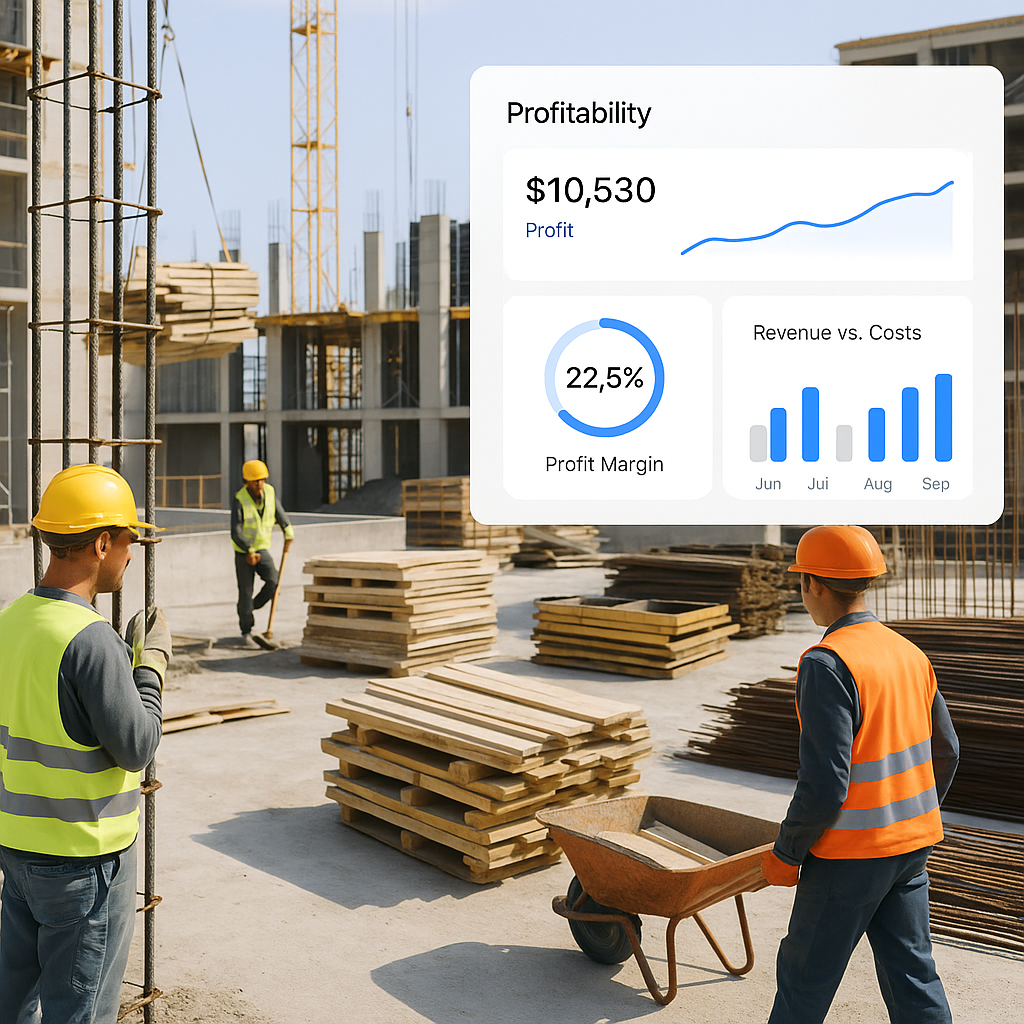
Why Margins Are Under Siege in Construction
Construction margins are notoriously slim, often hovering between 3-5% for many contractors. A single unexpected cost — whether it’s a labor shortage, material price hike, or scope creep — can wipe out that profit entirely. So why does this happen so often?
In many cases, it comes down to bad visibility. Contractors rely on outdated systems (or worse, spreadsheets) that don’t show the real-time impact of decisions. By the time you realize labor costs have skyrocketed or material overruns have piled up, you’ve already invoiced and locked in losses. It’s a challenging scenario.
The BOQ Margin: Your Early Warning System
One of the most effective tools to combat margin erosion is BOQ margin tracking. This isn’t just about knowing your profit at the end of the project — it’s about catching problems as they happen. The BOQ Margin report analyzes profit margins by comparing contracted values against costs for labor, material, plant, subcontractors, and overheads. If any BOQ item shows negative margins, you know something’s off.
Illustrative example — Imagine you have a quoted rate for a specific BOQ item, but your actual cost rate increases due to material price spikes. Without real-time tracking, you wouldn't notice until the project’s closeout. With BOQ margin tracking, you can spot the variance immediately and take corrective actions, such as renegotiating procurement contracts or adjusting resource allocation.
Real-Time Monitoring of Material Costs
Material cost fluctuations are a common challenge in construction. Without monitoring material margins regularly, unexpected price increases can significantly impact overall profitability. Real-time tools like BOQ Margin reports can alert you when material costs deviate from estimates. This enables you to flag issues, renegotiate with suppliers, and prevent cost overruns from cascading into other areas of the project.
Contractors who use these systems often report better control over procurement costs and fewer surprises at billing. Source: JobNext.ai
What Happens When You Don’t Track Margins?
Failing to track margins in real-time can lead to several issues:
- Scope Creep: Without clear margin tracking, you miss scope changes that escalate costs. For example, adding extra site work without revisiting BOQ profitability.
- Overbilling Risks: Contractors sometimes bill for completed work but don’t reconcile costs. This can result in paying for overruns already locked into invoices.
- Delayed Adjustments: Spotting negative margins too late means corrective action can’t fix the problem. You’re stuck absorbing the loss.
Best Practices for Real-Time Profitability Monitoring
If you’re serious about protecting margins, here’s what you should do:
- Weekly Margin Reviews: Run BOQ margin reports every week. This gives you time to act before problems compound.
- Combine Reports for Full Visibility: Use the BOQ Margin report alongside Resource Reconciliation and BOQ Progress reports. Together, these show profitability, budget variance, and schedule health.
- Drill Down: When margins start slipping, drill into cost categories (labor, materials, etc.) to pinpoint the root cause.
- Set Alerts: Systems like JobNext let you automate alerts for negative margins or cost overruns. You don’t need to monitor manually.
A Common Objection: “I Already Have an ERP”
You might be thinking: “We already track costs with our ERP.” But most generic ERPs don’t focus on construction-specific margin tracking. They handle accounting well but fail to drill into BOQ-level profitability. That’s why purpose-built tools like JobNext exist.
For example, JobNext’s BOQ Rate Analysis compares multiple dimensions per BOQ item: quoted rate, billing rate, scheduled rate, budgeted rate, and actual cost rate. This level of detail isn’t standard in most ERPs, but it’s critical for catching margin erosion early.
FAQ
Q: How often should I review BOQ margins? A: At least weekly. More frequent reviews (e.g., daily) are ideal for high-value or high-risk projects.
Q: Can small contractors afford real-time tracking tools? A: Yes. Many tools, like JobNext, are scalable and work for contractors managing small projects or multi-site operations.
Q: What’s the biggest mistake contractors make with margin tracking? A: Ignoring early warning signs. If you see negative margins but don’t act, you’re essentially locking in losses.
Closing Thoughts
Margins are too thin to leave profitability to guesswork. Real-time tools like BOQ margin tracking aren’t extras — they’re essentials for modern construction companies. If you’re dealing with margin erosion, you need a system that spots problems before they spiral.
Learn more at JobNext.ai