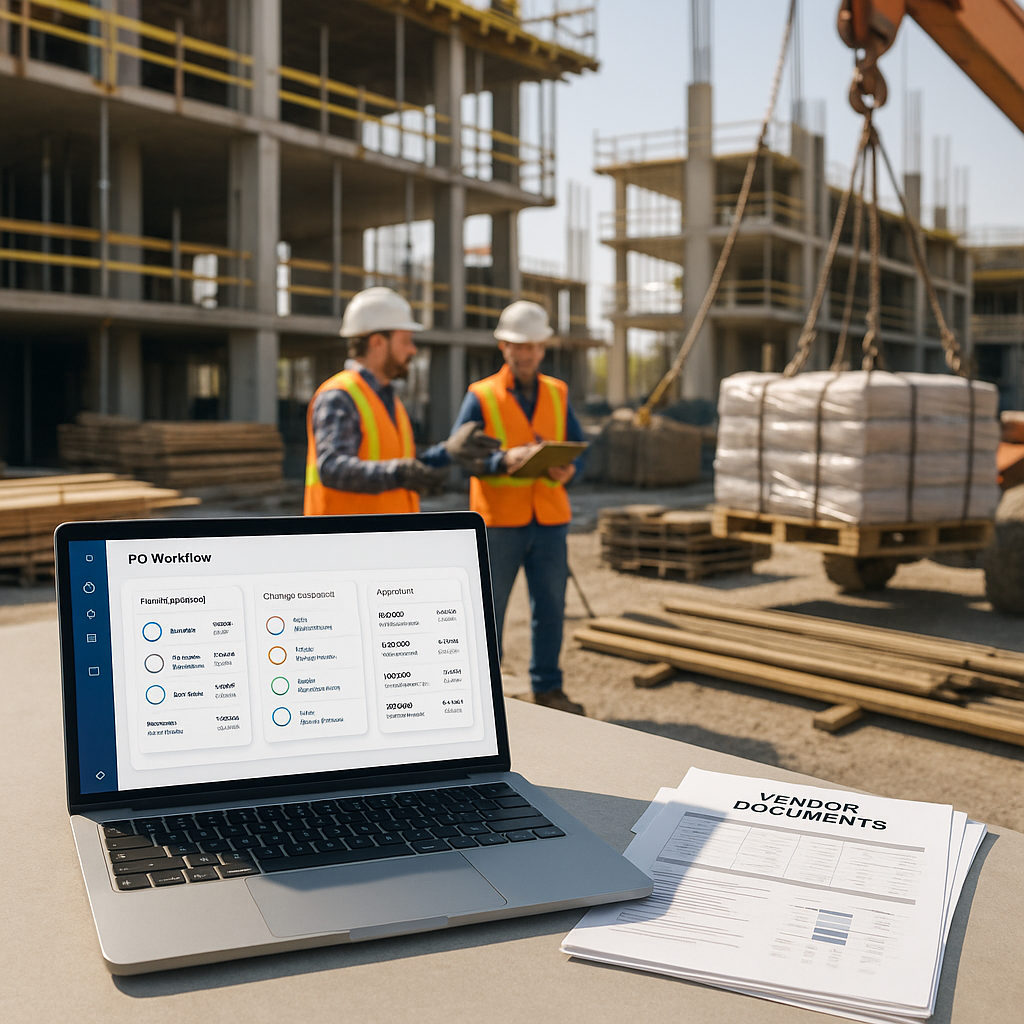
Why PO Workflow Matters in Construction Procurement
Procurement in construction isn’t just about buying materials. It’s how you manage costs, timelines, and accountability. A poorly handled purchase order (PO) can ripple through your project, causing delays, overspending, or even contractual disputes. In markets like India and GCC, where labor and material costs are volatile, the stakes are higher.
The PO/LPO (Local Purchase Order) workflow is a cornerstone of procurement. It’s the system that defines how materials are ordered, vendors are chosen, and payments are made. But many contractors still rely on informal processes or disconnected systems, leading to margin erosion and operational chaos.
Common Procurement Problems
Construction procurement faces unique challenges, often stemming from unstructured workflows. Below are the most common issues:
1. Approval Bottlenecks
Purchase orders often sit idle waiting for sign-offs from multiple stakeholders. This delay in approvals can push back material deliveries and disrupt project schedules. For example, if a critical material like concrete or rebar doesn’t arrive on time, it can halt progress on-site, leading to cascading delays across dependent tasks.
Actionable Step: Implement automated approval hierarchies based on PO value thresholds. For instance, smaller POs should be auto-approved by site managers, while larger ones require procurement head or director-level sign-offs.
2. Vendor Oversight Gaps
Without a clear system, contractors struggle to track vendor commitments. This results in disputes over quantities, specifications, and delivery timelines. For example, a vendor might claim they delivered materials according to the PO, but without proper documentation, disputes are inevitable.
Actionable Step: Use tools that automatically log vendor commitments, such as delivery dates and order specifications. Ensure that every PO includes detailed terms and conditions.
3. Budget Blind Spots
Approving POs without cross-checking them against project budgets risks overspending. Contractors often overlook cumulative costs across multiple POs, which can lead to mid-project budget crises.
Actionable Step: Always run a budget validation report before any PO approval. Tools like JobNext can flag overspending before the PO is finalized.
4. Urgency Mismanagement
Urgent orders often bypass competitive bidding and budget controls, leading to inflated costs. While urgent procurement is sometimes unavoidable, neglecting workflows can result in wasteful spending.
Actionable Step: Plan for contingencies by defining workflows for urgent procurement. For example, use Quick Order (QO) features that allow you to expedite purchases without compromising accountability.
A Better System: Structured PO Workflows
A structured PO workflow addresses these issues by standardizing procurement processes and enforcing accountability. Let’s break down the key components:
1. Start With Material Requisitions (MR)
Every PO should begin with a Material Requisition—a formal request tied to a specific job and scope. This ensures that procurement is directly linked to project requirements.
Actionable Steps:
- Generate requisitions via software like JobNext to avoid manual errors.
- Validate requisitions against project budgets to prevent overspending.
- Include detailed specs such as material type, quantity, required delivery date, and job reference.
2. Competitive Vendor Selection Through RFQs
Request For Quotations (RFQs) are essential for obtaining competitive pricing. Comparing vendors ensures cost efficiency and quality.
Actionable Steps:
- Define RFQ criteria based on material specifications, delivery timelines, and vendor reliability.
- Use procurement software to compare vendors side-by-side (e.g., lowest-cost and second-best options).
- Document vendor responses and quotes for accountability.
3. Approval Hierarchies
Not all purchases require the same level of scrutiny. Structured approval hierarchies ensure efficient decision-making.
Actionable Steps:
- Set value-based thresholds for approvals (e.g., ₹10,000 POs by site managers; ₹1,00,000 POs by directors).
- Automate approval workflows to avoid bottlenecks.
- Ensure category-specific approvals for technical materials requiring specialized scrutiny.
4. Budget Checks Before Approval
Every PO affects the project budget, making validation crucial.
Actionable Steps:
- Track cumulative material costs using a Material Budget Burn report.
- Use procurement software to flag POs that exceed budget limits.
- Adjust budgets proactively before approving POs.
5. Structured Payment Milestones
Avoid risks tied to 100% advance payments. Instead, split payments across order, delivery, and acceptance stages.
Actionable Steps:
- Define payment milestones in POs (e.g., 30% advance, 40% on delivery, 30% on acceptance).
- Link payments to vendor performance metrics to ensure accountability.
- Automate payment schedules via procurement software.
6. Document Everything
Documentation is critical for audits and dispute resolution.
Actionable Steps:
- Attach vendor quotations, technical drawings, and test certificates directly to the PO.
- Maintain detailed records of amendments and approvals.
- Use software to store procurement files securely for future reference.
Decision Framework: PO Workflow Comparison Table
| Workflow Stage | Traditional Process | Structured PO Workflow |
|---|---|---|
| Material Requisition | Informal requests via email or paper | Formal, budget-validated MR via software |
| Vendor Selection | Limited comparison; manual RFQs | Competitive RFQs with side-by-side analysis |
| Approval Process | Delayed manual sign-offs | Automated, multi-level approvals |
| Budget Validation | Rarely checked against project budgets | Real-time budget validation reports |
| Payment Milestones | Full advance payments | Split payments tied to milestones |
| Documentation | Scattered or missing records | Centralized, audit-ready records |
Common Mistakes in PO Workflows
Below are mistakes contractors often make and how to fix them:
1. Skipping RFQs for High-Value Purchases
Even urgent orders should undergo competitive bidding to ensure cost efficiency.
Solution: Use Quick Order workflows that allow RFQs even under tight deadlines.
2. Ignoring Delivery Dates
Delivery delays can halt project progress, especially for critical materials.
Solution: Use all three date fields (Ready, Ship, Arrival) to track delivery timelines.
3. Cancelling POs Instead of Amending
Cancelled POs create confusion and disrupt audit trails.
Solution: Amend POs whenever possible to preserve history and accountability.
4. Overloading Approvals
Not all POs require higher-level sign-offs, which can create bottlenecks.
Solution: Implement value-based thresholds for approvals.
FAQ
Q: What’s the difference between PO and LPO?
A: A PO (Purchase Order) is typically used for larger contracts, while an LPO (Local Purchase Order) is a localized version used for smaller or urgent procurements. Both follow similar workflows but differ in scope and vendor requirements.
Q: How can contractors avoid overspending in procurement?
A: Use budget-validated requisitions, structured RFQs, and approval hierarchies to align purchases with project budgets.
Q: How does structured procurement prevent disputes?
A: Structured workflows document every step, including vendor commitments, delivery timelines, and payment milestones, creating a clear audit trail.
Q: What should be done for urgent purchases?
A: Use tools like JobNext’s Quick Order feature to expedite urgent procurement while maintaining accountability.
Q: How can delivery delays be minimized?
A: Use detailed delivery tracking fields, enforce vendor penalties for delays, and maintain backup vendor options.
Call to Action
Struggling with procurement chaos? JobNext’s structured PO workflows can help you manage approvals, vendor selection, and budget tracking seamlessly. Get started free →
Learn more at JobNext.ai