Procurement KPIs in Construction: Metrics That Drive Profitability
Procurement in construction isn’t just about buying materials. It’s about buying smart. The difference between a well-executed procurement strategy and a chaotic one? Your margins. Too often, contractors focus on price alone and ignore critical metrics that reveal inefficiencies, delays, or supplier risks. Let’s break down the procurement KPIs that actually move the needle—and how to track them effectively.
Why Procurement Metrics Matter in Construction
Managing multiple active sites with separate material needs can lead to inefficiencies like overpaying for materials, delays due to unreliable vendors, and ballooning budgets without clear reasons. Procurement KPIs help identify these inefficiencies and prevent margin leaks. But what should you measure?
Key Procurement KPIs to Track
Here’s where most contractors go wrong: they track too much or too little. Focus on these practical, high-impact KPIs:
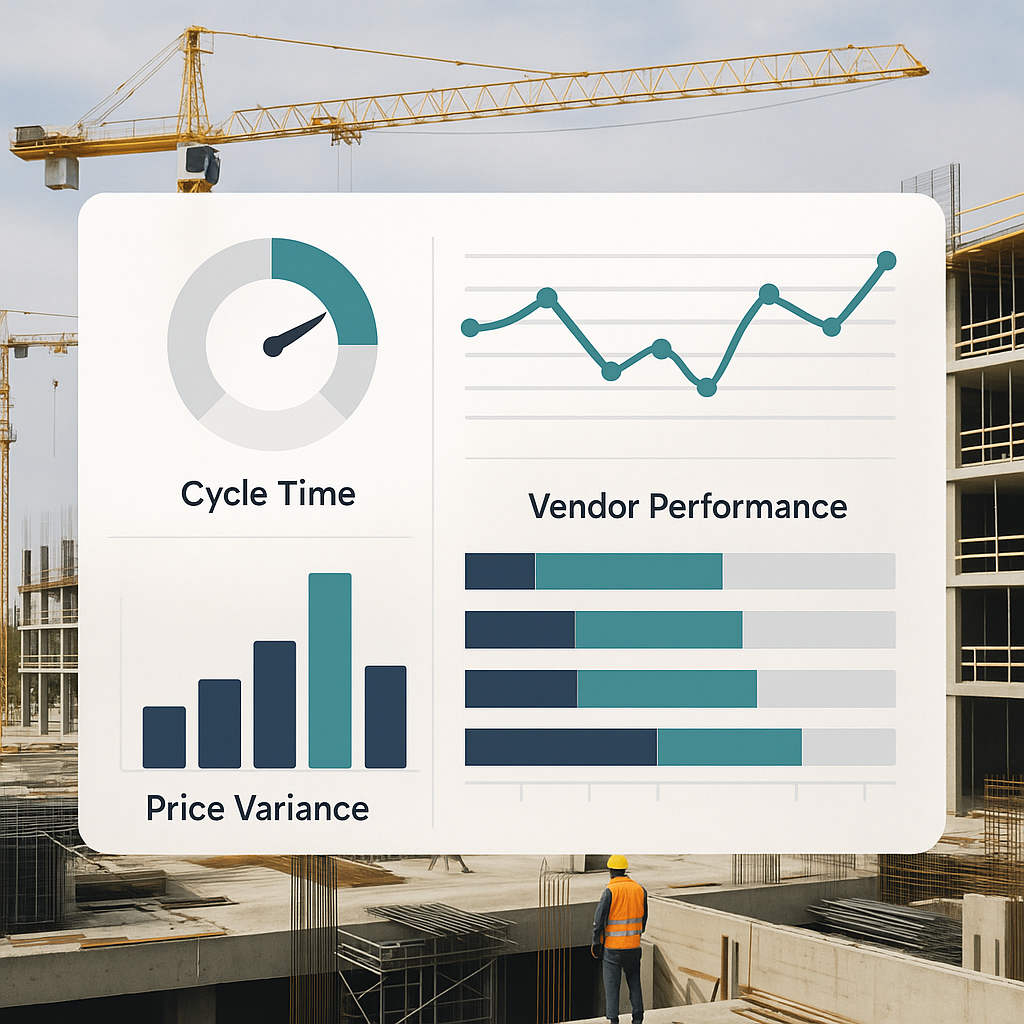
1. Cycle Time Metrics
- RFQ → Offer (Days): How long does it take to receive vendor quotes after sending an RFQ? Delays here slow down the entire procurement process.
- Offer → PO (Days): How quickly are vendor offers evaluated and converted into purchase orders? Faster approvals mean faster deliveries.
- PO → Delivery (Days): Are vendors meeting promised delivery deadlines? Late deliveries disrupt site schedules and inflate costs.
Why it matters: Tracking these cycle times helps identify bottlenecks and improve overall efficiency.
2. Price Variance
- Budgeted vs. Actual PO Rates: How often are you paying more than planned for materials? Identify which items are driving overruns.
Practical example: Illustrative example — A contractor discovered they were consistently paying above budget for certain materials due to lack of rate enforcement. By implementing rate contracts, they reduced costs significantly.
3. Vendor Performance Metrics
- On-Time Delivery (%): What percentage of deliveries arrive on schedule? Late deliveries hurt productivity.
- Defect Rate: How often do materials arrive damaged or unusable?
- Spend Concentration: Are you over-relying on a few vendors, creating a single-point failure risk?
Pro tip: Use a vendor scorecard to rank suppliers on these metrics. This helps prioritize reliable vendors for future orders.
4. Procurement Value Metrics
- Spend by Category: Are you overspending on materials vs. subcontractor services? Understanding the split helps rebalance budgets.
- Bulk Purchase Savings: Consolidating material requests across sites can lead to cost savings through bulk pricing.
Illustrative example: A contractor managing multiple sites reduced costs by consolidating purchases into fewer, larger orders, which allowed them to negotiate better rates.
Common Mistakes Contractors Make with Procurement KPIs
- Focusing Only on Price: Price is important, but delivery reliability and quality matter just as much. A cheaper vendor isn’t worth it if delays cost you more in the long run.
- Ignoring Cycle Times: Long RFQ-to-PO cycles can lead to project delays. If your process takes weeks, you’re losing time and money.
- Overlooking Vendor Data: Not tracking vendor performance is like flying blind. You need to know who your reliable partners are.
- No Real-Time Visibility: If your data lives in spreadsheets, it’s outdated. A real-time dashboard ensures you act on current insights, not last month’s numbers.
How Technology Makes Tracking Easier
Manually tracking procurement KPIs across multiple sites can be challenging. Technology solutions can simplify this process by automating data collection and providing real-time insights. Features to look for include:
- Automated Rate Contracts: Lock in vendor pricing to avoid overruns.
- Consolidated Material Requests: Collate material requests for bulk savings.
- Real-Time Dashboards: Visualize trends like category spend and supplier delivery performance.
These tools can help identify inefficiencies, such as duplicate material requests or unreliable vendors, and provide actionable insights to improve procurement processes.
FAQ: Procurement KPIs in Construction
Q: What’s the most critical KPI for procurement?
A: It depends on your pain points. If delays are your issue, focus on cycle times. If cost overruns hurt margins, track price variance.
Q: How often should we review procurement KPIs?
A: Monthly reviews work for most contractors. Larger firms with high procurement volumes should consider weekly updates.
Q: What’s the best way to improve on-time delivery rates?
A: Start with vendor scorecards. Rank suppliers on delivery reliability and quality, then prioritize high-performing vendors for future orders.
Q: Can small contractors benefit from procurement dashboards?
A: Absolutely. Even with fewer sites, dashboards can identify inefficiencies like duplicate material requests or unreliable vendors.
Conclusion
Procurement KPIs aren’t just numbers—they’re actionable insights that can save contractors time and money. Whether it’s reducing cycle times, enforcing rate contracts, or improving vendor reliability, the right metrics drive profitability. By leveraging technology, tracking these KPIs becomes more efficient and impactful.
Learn more at JobNext.ai