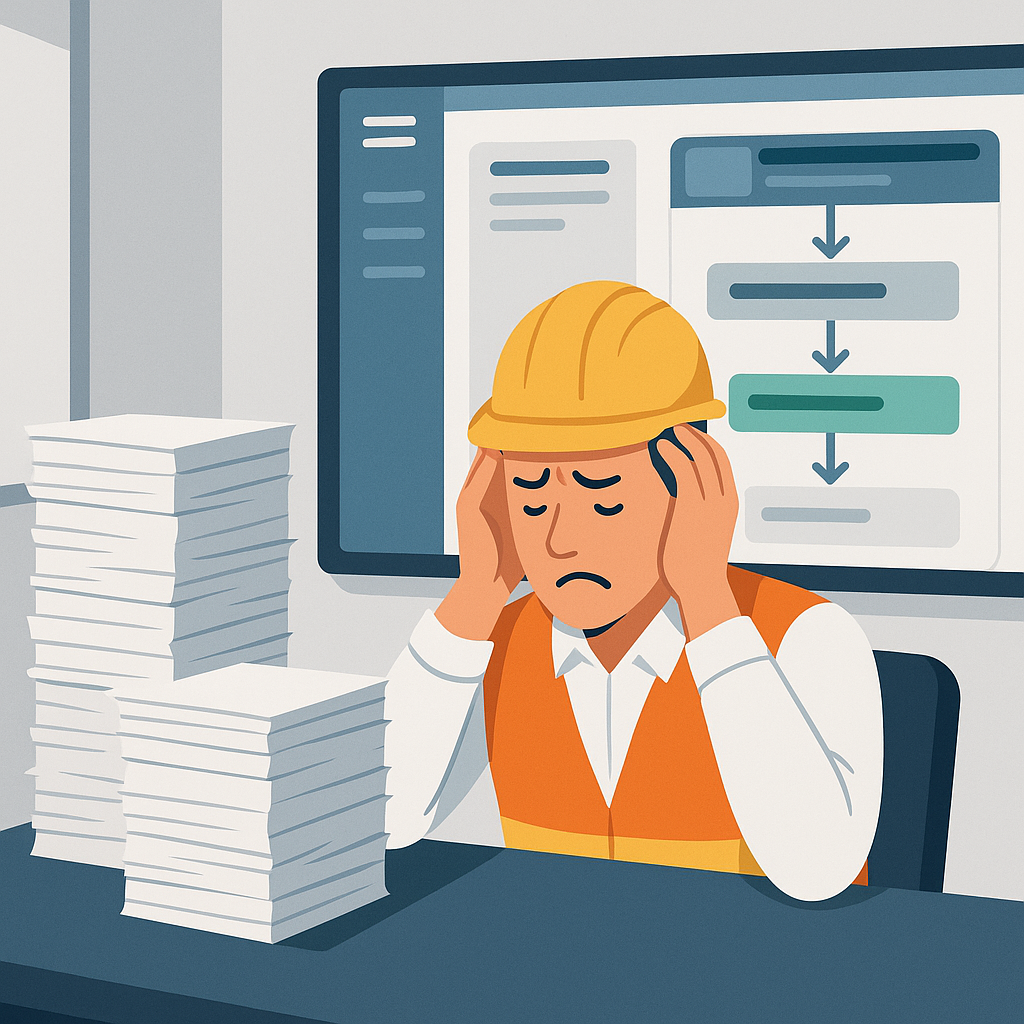
The Hidden Cost of Procurement Chaos
Every contractor has been there: A site manager makes an urgent purchase because the right materials didn’t arrive on time. Or worse, an RFQ gets lost in an email black hole, and you’re stuck overpaying a vendor to avoid project delays. These aren’t isolated incidents — they’re the silent killers of margins.
How bad can it get? A contractor in Mumbai recently shared that a single forgotten RFQ led to ₹1.5 lakh in unexpected costs. It wasn’t just the overpayment that hurt. The delay caused a domino effect, pushing back schedules and racking up additional labor costs. Now multiply that across multiple projects, and you see how the numbers add up.
But what’s the real issue here? It’s not just bad luck or a busy team. The problem is systemic: disconnected and manual procurement workflows.
Why Most Contractors Struggle with Procurement
Many small and mid-sized contractors rely on a mix of Excel sheets, WhatsApp messages, and emails to handle procurement. While it might seem "good enough," it’s a house of cards. Let’s break this down further:
1. No Centralized Tracking
RFQs, vendor offers, and POs often live in silos. It’s not uncommon for crucial documents to get lost in email threads or forgotten in WhatsApp groups. If you’re lucky, someone remembers to chase a missing document. If not, you’re bleeding money. For example:
- A contractor in Chennai recently lost ₹5 lakh when a purchase order (PO) wasn’t issued on time, delaying the delivery of steel bars. The result? Work on-site ground to a halt, and labor costs piled up.
2. Approval Chaos
Does every site manager have the authority to make purchases? Who’s signing off on POs? Without a clear workflow, unauthorized spending can spiral out of control. One construction firm in Bangalore discovered that site managers were frequently over-ordering materials, leading to inventory waste and storage issues. The lack of clear approval rules cost them an estimated ₹7 lakh in just three months.
3. Vendor Management Issues
Sticking with the same vendors might feel easier, but are you getting the best rates? Without a system to compare vendor offers, you’re likely leaving money on the table. A recent survey by McKinsey found that contractors who consistently evaluate vendor options save an average of 10% on procurement costs.
4. Lack of Real-Time Insights
Most contractors operate in the dark when it comes to procurement. Is a vendor delaying delivery? Are purchases exceeding the allocated budget? Without real-time insights, you’re essentially flying blind.
A Quick Test: Is Your Procurement Process Broken?
Ask yourself the following:
- Do you rely heavily on emails or WhatsApp for procurement communication?
- Are you often unsure about the status of RFQs, POs, or vendor deliveries?
- Have you experienced unexpected costs due to procurement delays or errors?
If you answered “yes” to even one of these, it’s time to rethink your process.
The Solution: Structured Procurement Workflows
The good news? The chaos is fixable. A modern construction ERP like JobNext can bring order to the chaos. Let’s break down how structured workflows can transform your procurement process.
1. Centralized RFQ Management
With JobNext, every material request (MR) flows into a centralized dashboard. From there, you can create RFQs and track responses from vendors. This eliminates the risk of losing important communications in email threads or WhatsApp messages.
Example: A contractor in Delhi used to issue RFQs via email, and responses would often get delayed or overlooked. After implementing JobNext, they reduced RFQ processing time by 40%, ensuring faster vendor selection and quicker material delivery.
Actionable Steps:
- Consolidate all RFQs into a single platform.
- Set deadlines for vendor responses to ensure timely decisions.
- Use automated reminders to follow up with vendors who haven’t responded.
2. Automated Approval Chains
Set up multi-level approval workflows for POs. For example, site managers can raise requests, but they won’t turn into POs until the project manager or finance team signs off. This ensures you’re not blindsided by unauthorized expenses.
Case Study: A Dubai-based contractor implemented approval workflows on JobNext. Previously, their site managers had the authority to make purchases up to ₹50,000 without oversight. After implementing approval chains, they reduced unauthorized spending by 25% in the first quarter.
Actionable Steps:
- Define clear approval thresholds (e.g., site managers can approve up to ₹20,000; beyond that, the project manager must sign off).
- Use software to automate notifications for approvals.
- Regularly review the approval chain to ensure it aligns with business needs.
3. Vendor Offer Comparisons
JobNext’s platform lets you compare vendor offers side by side. Instead of sticking with the usual supplier, you can make data-driven decisions.
Example: A Hyderabad-based contractor saved 15% on cement purchases after comparing offers from three vendors. JobNext’s side-by-side comparison tool highlighted price disparities, helping them choose the most cost-effective option.
Actionable Steps:
- Regularly invite multiple vendors to bid on your RFQs.
- Use a standardized template for vendor quotes to make comparisons easier.
- Document vendor performance (e.g., delivery times, quality issues) and factor this into your decisions.
4. Real-Time Insights
You’ll know exactly where your procurement stands at any moment. Need to check if a PO has been issued? Want to see which vendors are delaying deliveries? It’s all there in real-time dashboards.
Data Point: In a survey by Deloitte, 60% of contractors said real-time data improved their ability to manage procurement risks and reduced project delays.
Actionable Steps:
- Implement dashboards that track RFQs, POs, vendor performance, and budget utilization.
- Schedule weekly reviews of procurement data to identify bottlenecks.
- Use analytics to forecast future material needs and reduce over-ordering.
Don’t Just Take Our Word for It
A recent post on JobNext’s blog highlights how cloud ERPs can prevent profit leaks in areas like procurement. The takeaway? Contractors who switch to structured workflows save both time and money.
Case Study: ₹10 Lakh Saved Annually
A mid-sized contractor in the UAE adopted JobNext and saw immediate results. Before implementation, they frequently overpaid for materials due to last-minute purchases and vendor delays. With JobNext’s centralized platform and vendor comparison tools, they saved ₹10 lakh annually by eliminating overpayments and delays.
FAQ
1. What size company needs a procurement workflow?
Even contractors with as few as 50 employees can see benefits. If you’re juggling multiple projects or vendors, you need structure. A good rule of thumb: If procurement issues have caused delays or cost overruns in the past year, it’s time for a system.
2. How long does it take to implement a structured workflow?
Implementation timelines depend on the complexity of your operations. With a solution like JobNext, you can get started in weeks, not months. The key is training your team to stick to the process. Many contractors report seeing improvements within the first project cycle.
3. What’s the ROI of a procurement workflow?
Most contractors see tangible savings within the first project cycle. For example, one contractor in Bangalore saved ₹20 lakh annually by eliminating overpayments and delays. Improved vendor management and reduced labor costs often lead to significant ROI.
4. Do I need to replace my existing tools?
Not necessarily. Many modern solutions, including JobNext, can integrate with your current tools like accounting software and project management platforms. This means you can keep what works and upgrade only what’s broken.
5. How do I get my team on board with a new system?
Change can be hard, but communication and training are key. Start by showing your team the inefficiencies in the current system and how the new workflow will make their jobs easier. Hosting hands-on training sessions and offering ongoing support can ensure a smooth transition.
Comparison Table: Manual vs. Structured Procurement Workflows
| Feature | Manual Workflow | Structured Workflow |
|---|---|---|
| RFQ Management | Emails, WhatsApp, and Excel sheets | Centralized platform dashboard |
| Approval Process | Informal, prone to errors | Automated, with multi-level control |
| Vendor Comparison | Rarely done, time-consuming | Automated and side-by-side analysis |
| Real-Time Insights | Not available | Real-time dashboards and analytics |
| Cost Savings | Minimal, often overpaying vendors | Average 10-15% cost reduction |
Call to Action
If your procurement process feels chaotic, it’s time to take control. JobNext offers a structured, stress-free way to manage RFQs, POs, and vendor relationships.
Take the first step toward streamlined procurement today. Learn more →
Learn more at JobNext.ai