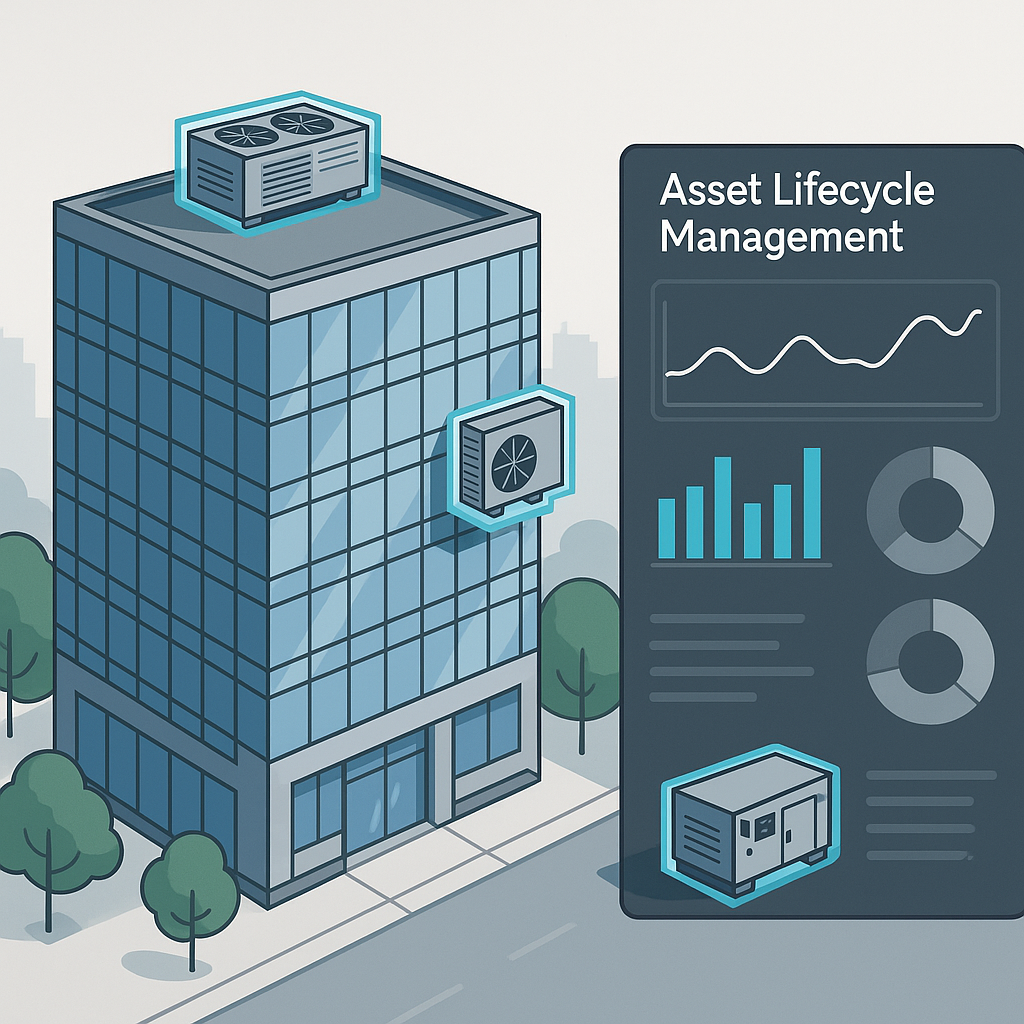
Why Asset Lifecycle Management Is Crucial for Hard FM Contractors
Hard FM operations often revolve around managing physical assets—HVAC systems, generators, elevators, and more. These assets have intricate lifecycles that demand careful tracking and management to ensure operational efficiency, compliance, and profitability. From procurement to maintenance to eventual disposal, every stage requires structured processes. Without a proper system, contractors risk downtime, compliance failures, and budget overruns, which can damage client trust and erode profitability.
Let’s take HVAC systems as an example. Imagine you’re managing a commercial building with 20 units spread across multiple floors. Each unit has unique maintenance schedules, spare part requirements, and replacement timelines. Keeping track of all this manually is not only time-consuming but prone to errors. One missed maintenance check could lead to system failure, increased downtime, and expensive repairs—potentially costing you the client.
The Role of Facilities Management Software
Facilities management software is indispensable for contractors who need to manage asset lifecycles effectively. These tools centralize all aspects of asset management, ensuring that contractors can track procurement, utilization, maintenance, depreciation, and disposal through a single platform. This reduces reliance on outdated methods like spreadsheets, paper logs, and manual vendor management.
Key Features of Facilities Management Software:
-
Procurement Tracking
- Allows contractors to purchase assets through approved vendors.
- Tracks capital expenses and ensures budget compliance.
- Provides visibility into vendor performance and cost efficiency.
Actionable Step: Standardize procurement workflows by integrating vendor ratings and historical data into the software. This ensures only reliable vendors are selected to minimize risks.
-
Utilization Monitoring
- Tracks usage hours and productivity metrics for assets.
- Flags underutilization or excessive wear and tear.
Actionable Step: Configure software alerts for usage anomalies, such as unusually high operation hours, which might indicate overuse or improper allocation.
-
Preventive Maintenance Scheduling
- Schedules routine maintenance based on operational data.
- Logs repair histories for compliance and future planning.
Actionable Step: Use historical maintenance data to set thresholds for predictive maintenance. For example, flag HVAC systems for inspection after a specific number of operation hours.
-
Depreciation Automation
- Calculates depreciation using Straight-Line or Written Down Value methods.
- Allocates depreciation expenses to specific jobs based on asset usage.
Actionable Step: Automate depreciation calculations and integrate them into job costing reports to ensure accurate billing and compliance.
-
Disposal Management
- Tracks asset disposal timelines.
- Generates compliance-ready records, including disposal invoices and journal entries.
Actionable Step: Use the software to generate gain/loss reports for disposed assets, ensuring compliance with GST and TDS regulations.
Comparison: Manual vs. Software Asset Management
| Aspect | Manual Management | Software-Based Management |
|---|---|---|
| Procurement Tracking | Prone to errors, inconsistent vendor records | Automated workflows with vendor performance data |
| Maintenance Scheduling | Reactive, often missed | Preventive and predictive scheduling |
| Depreciation Tracking | Time-intensive, error-prone calculations | Automated calculations tied to job costing |
| Disposal Compliance | Risk of non-compliance | Auto-generated compliant records |
Real Example: Asset Depreciation and Compliance
Imagine you’ve just procured a fleet of generators for a multi-building project. These generators require regular servicing, fuel consumption monitoring, and depreciation tracking. Without proper tools, managing this can become overwhelming, leading to compliance risks and inaccurate cost allocation.
With software like JobNext, you can:
- Set up depreciation using Straight-Line or Written Down Value methods.
- Automatically allocate depreciation expenses to specific jobs based on usage.
- Generate real-time reports for statutory compliance with GST and TDS regulations.
Actionable Steps for Compliance:
- Ensure the software is configured to auto-generate journal entries for asset depreciation.
- Cross-verify records with statutory requirements monthly to avoid penalties.
Without automation, you’d spend hours manually calculating depreciation and reconciling job costs, increasing the risk of errors. Missed entries can lead to inaccurate billing, compliance penalties, and strained client relationships.
How Real-Time Monitoring Prevents Downtime
Downtime is the enemy of hard FM operations. When critical assets fail unexpectedly—like a building’s main chiller—it leads to operational chaos, angry clients, and expensive emergency repairs. Facilities management software with real-time monitoring tools can mitigate these risks.
Benefits of Real-Time Monitoring:
-
Early Detection of Anomalies
- Tracks equipment usage rates and flags unusual patterns before failures occur.
-
Consumable Tracking
- Logs material issuance (fuel, spare parts) to prevent shortages.
-
Preventive Maintenance
- Schedules maintenance based on historical usage data.
Take JobNext’s material issue workflow as an example. Their structured seven-step process ensures consumables like spare parts and fuel are tracked from issuance to usage, reducing waste and ensuring availability during maintenance.
Actionable Steps:
- Configure automated alerts for critical asset anomalies (e.g., temperature thresholds for chillers).
- Set up workflows for consumable tracking to prevent shortages during repairs.
Common Mistakes Contractors Make
-
Ignoring Preventive Maintenance
- Many contractors wait for assets to fail, leading to expensive repairs. Preventive maintenance schedules should be integrated into workflows.
Actionable Step: Use historical asset data to create predictive maintenance schedules for high-value equipment.
-
Underestimating Depreciation Tracking
- Errors in depreciation tracking can lead to inaccurate job costing and compliance violations.
Actionable Step: Automate depreciation tracking and integrate it with accounting modules.
-
Skipping Compliance Checks
- Contractors often overlook statutory requirements during asset disposal, risking penalties.
Actionable Step: Use software to auto-generate disposal records aligned with GST and TDS requirements.
-
Overlooking Utilization Metrics
- Poor visibility into asset usage leads to inefficiencies and underutilization.
Actionable Step: Monitor utilization metrics and reallocate underutilized assets to maximize ROI.
FAQs
Q: How can I ensure compliance during asset disposal? A: Use facilities management software that auto-generates disposal invoices and journal entries. Tools like JobNext also calculate gain/loss automatically, ensuring compliance with GST and TDS regulations.
Q: What’s the best way to track maintenance schedules? A: Implement software with preventive maintenance scheduling features. Look for systems that log repair histories and send real-time alerts for upcoming tasks.
Q: Can facilities management software reduce asset downtime? A: Absolutely. Real-time monitoring tools identify potential failures early, while consumable tracking workflows ensure spare parts are available for maintenance.
Q: How do I choose the right facilities management software? A: Evaluate features like preventive maintenance scheduling, real-time monitoring, depreciation automation, and compliance support. Compare platforms using a decision framework.
Q: Is asset lifecycle management only relevant for large contractors? A: No. Even small contractors benefit from structured asset management, as it reduces inefficiencies, ensures compliance, and improves client satisfaction.
Call-to-Action
If asset lifecycle management feels chaotic, JobNext can help. Their Equipment & Plant Management Module simplifies everything from procurement to disposal. Explore the platform →
Learn more at JobNext.ai