Why PPM Scheduling Matters for Multi-Site Construction
Construction projects rarely go as planned. Equipment breaks down, teams miss deadlines, and resources are misallocated. For multi-site operations, these issues multiply fast. Preventive Planned Maintenance (PPM) scheduling isn’t just a buzzword—it’s a way to avoid chaos.
PPM scheduling ensures maintenance tasks are pre-planned and executed before failures occur. This is especially critical for contractors managing heavy equipment fleets across multiple locations. Without a structured plan, equipment downtime can spiral into revenue loss, delayed timelines, and frustrated clients.
What Does PPM Scheduling Include?
PPM scheduling creates a roadmap for handling maintenance tasks. Here’s what it typically covers:
- Asset Inventory: A list of all equipment requiring maintenance.
- Task Frequency: Daily, weekly, monthly, or quarterly schedules.
- Resource Allocation: Who will perform the tasks and where.
- Dependencies: Tasks that rely on specific conditions, like weather.
- Monitoring: Tracking completion and performance metrics.
Preventive maintenance is widely recognized as a way to reduce unplanned downtime in asset-heavy industries like construction. Yet many contractors still rely on reactive repairs, which often cost significantly more.
Common Problems in PPM Scheduling
- Missed Maintenance Windows: Without tracking systems, teams often overlook scheduled tasks.
- Overlapping Resource Use: Equipment and manpower are double-booked across sites.
- Poor Documentation: No historical data to predict future needs accurately.
- Budget Overruns: Unplanned repairs eat into project profitability.
So, how do you fix these issues? Start with structured workflows.
Practical PPM Strategies
Here are some strategies to improve PPM scheduling for multi-site construction projects:
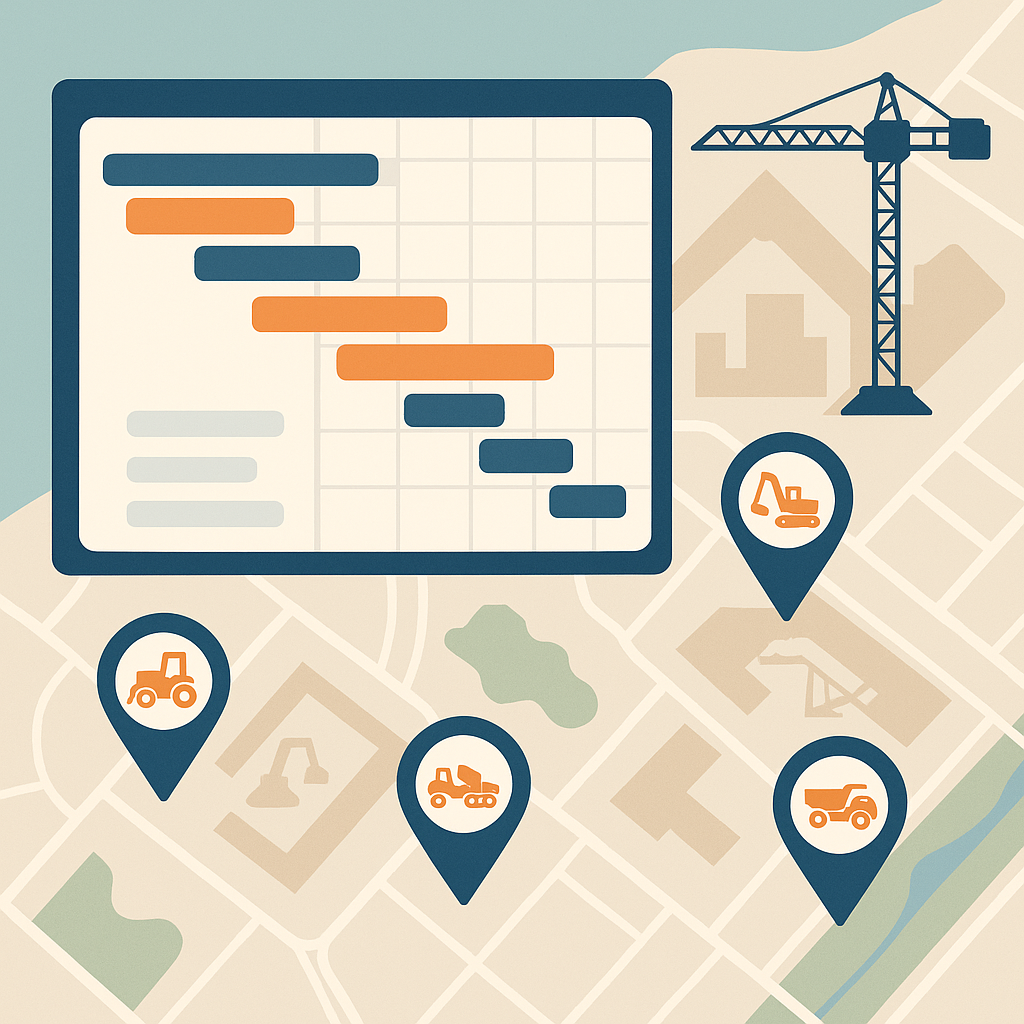
- Centralized Scheduling: Use tools that allow you to create and manage maintenance schedules across all sites in one place. This ensures each task aligns with project timelines.
- Resource Tracking: Link equipment maintenance schedules to manpower allocation. For example, if a loader needs servicing weekly, assign technicians in advance to avoid last-minute chaos.
- Budget Control: Tie every maintenance task to the project’s budget, ensuring costs are pre-approved and tracked. This prevents budget leakage from over-servicing or duplicate repairs.
- Historical Data: Maintain detailed maintenance logs to help predict future needs based on past performance.
Mistakes to Avoid
- Ignoring Frequency Adjustments: Not all equipment needs monthly servicing. Adjust schedules based on usage intensity.
- Skipping Documentation: Maintenance records are critical for audits and warranty claims.
- Neglecting Cross-Site Coordination: Equipment often rotates between sites. Without centralized tracking, tasks get missed.
FAQ
Q: What’s the biggest ROI from PPM scheduling?
A: Reduced downtime. This directly impacts project timelines and profitability.
Q: Does PPM work for smaller contractors?
A: Absolutely. Even a small contractor with a few sites can benefit from structured maintenance workflows.
Q: How do I start PPM scheduling?
A: Begin with asset inventory and task frequency. Use tools that simplify scheduling and tracking to streamline the process.
Closing Thoughts
PPM scheduling isn’t just for mega-projects. Small and mid-sized contractors can benefit significantly by adopting smarter strategies. If you’re struggling with equipment downtime or maintenance chaos, consider exploring tools designed for the complexities of multi-site construction. Structured workflows and centralized tracking can make a significant difference in reducing downtime and improving efficiency.
Learn more at JobNext.ai