Why Vendor Performance Matters More Than Ever
Margins in construction are tight. Everyone knows that. But what many don’t realize is how much those margins depend on your vendors. A single delayed delivery can derail your project schedule. Poor material quality? That’s a rework nightmare waiting to happen. And if you’re not tracking vendor performance, these issues can silently erode your profitability.
In many cases, contractors focus primarily on getting the lowest price. But that’s a mistake. Price is just one piece of the puzzle. What about delivery reliability? Or compliance with safety and statutory requirements? Ignoring these can cost far more than any upfront savings.
So, how do you track vendor performance in a way that actually improves outcomes? Let’s break it down.
The Metrics You Need on Your Vendor Scorecard
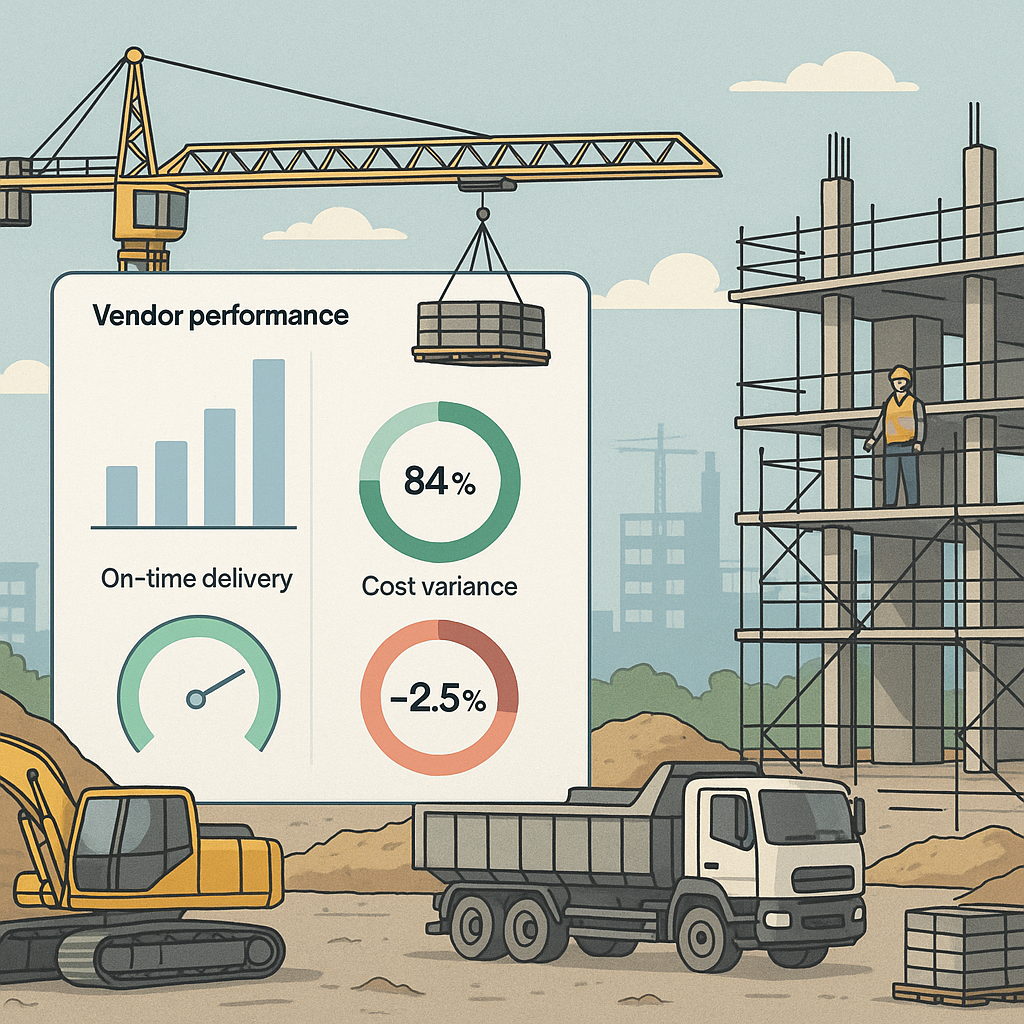
A good vendor performance scorecard isn’t just a checklist. It’s a tool to measure, compare, and improve vendor relationships. Here are the metrics that matter:
-
On-Time Delivery Rate
- Why it matters: Late deliveries throw off your project schedule, leading to cascading delays.
- How to track: Compare promised delivery dates to actual delivery dates. Use visual tools like heatmaps to identify trends.
-
Cost Variance
- Why it matters: A vendor quoting low but consistently exceeding estimates is a red flag.
- How to track: Measure the difference between purchase order (PO) value and final invoice. Look for patterns—are certain vendors consistently over budget?
-
Material Quality Issues
- Why it matters: Poor-quality materials lead to rework, which impacts margins.
- How to track: Log rejected consignments and defect rates.
-
Compliance Score
- Why it matters: Non-compliance can lead to penalties and project shutdowns.
- How to track: Check for GST/TDS compliance, insurance coverage, and safety certifications.
-
Vendor Concentration Risk
- Why it matters: Relying too heavily on a single vendor is risky.
- How to track: Use tools like Pareto charts to identify top vendors by spend.
-
Dispute History
- Why it matters: Frequent disputes indicate deeper issues like unclear scope or poor communication.
- How to track: Maintain records of disputes, resolutions, and associated costs.
Building the Scorecard: A Step-by-Step Guide
Here’s how to create a vendor performance scorecard that works:
-
Start with Data Collection
- Pull historical data from your procurement and project management systems.
-
Define Weightages
- Not all metrics are equally important. For example, on-time delivery might get a higher weight compared to other metrics.
-
Use a Scoring System
- Assign scores (e.g., 1-5) for each metric. Higher scores indicate better performance.
-
Automate Where Possible
- Manual tracking can be time-consuming. Consider using tools that automate scorecard generation and send alerts for underperforming vendors.
-
Review Quarterly
- Vendor performance isn’t static. Review and update your scorecard every quarter.
Common Mistakes to Avoid
-
Overemphasizing Price
- A low price doesn’t mean low cost. Look at the total landed cost, including delays and rework.
-
Ignoring Small Vendors
- Smaller vendors often have niche strengths. Don’t overlook them just because they aren’t big names.
-
Using Inconsistent Metrics
- Standardize your metrics across all projects to ensure fair comparisons.
FAQ
Q: How do I handle vendors who consistently underperform?
A: Start with a conversation. Share their scorecard data and give them a chance to improve. If performance doesn’t improve, look for alternatives.
Q: Can I use a scorecard for subcontractors too?
A: Absolutely. Subcontractor performance tracking is critical, especially for large projects. Metrics like work quality and adherence to timelines are key.
Q: What’s the best way to get vendors to comply with the scorecard?
A: Make it part of your contract terms. Share the scorecard metrics upfront and tie them to incentives or penalties.
Conclusion
Vendor performance can make or break your projects. By implementing a structured scorecard system, you can identify issues early, improve vendor relationships, and ultimately enhance project outcomes. Start small, track the right metrics, and refine your approach over time.
Learn more at JobNext.ai